58-59 Balaji Nagar, St Stephen Circle, Makarwali Road, Ajmer, Rajasthan 305004

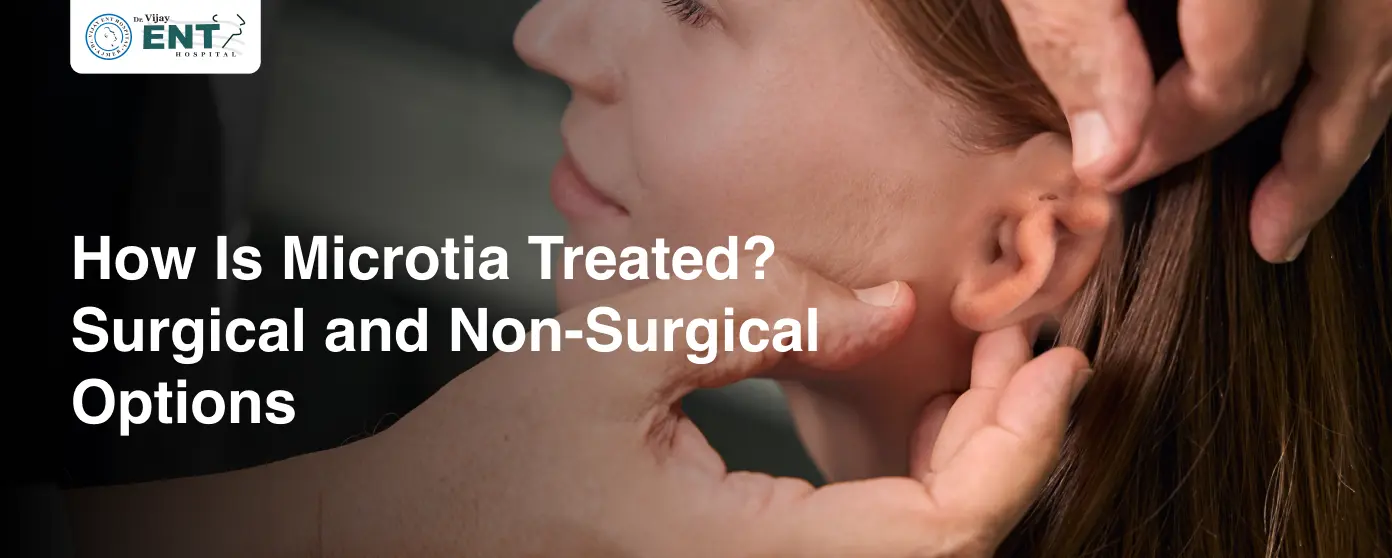
Microtia is a congenital birth defect in which the outer ear is underdeveloped or missing. This is a very rare condition, affecting 1 out of 12,000 births in the world. Patients with Microtia primarily experience problems of hearing loss, which directly impacts their daily life. However, it is curable if you get treated under the guidance of the best Microtia surgery. This condition can be resolved efficiently with some surgical as well as non-surgical treatments.
It is a surgery in which the patient’s own rib cartilage is used to build the missing outer part of the ear. This surgery is usually suggested for kids aged 6 to 10.
The surgery process involves harvesting cartilage from ribs, shaping it in the ear framework, and placing it under the skin of the ear. It looks 100% natural to normal ears.
In this surgery, the ear will be reconstructed with artificial materials like porous polyethylene and given it the shape of a normal ear. This surgery doesn’t need any patient’s rib cartilage, making the treatment easier and faster. However, the process involves proper planning before surgery. It defines connecting bones with the right placement of tissues. Next, an artificial material is reshaped into another ear framework and placed under the skin in a precise position.
This treatment is both surgical and non-surgical. In the surgical process, small titanium implants are placed on the ear side of the skull. After healing for 2-3 months, a prosthetic ear is attached to the implants with the help of clips and magnets. Prosthetic ear treatment needs the best Microtia surgeon to match ear size, color, and structure.
This is a non-surgical process in which a custom-made artificial ear is attached to the patient’s ear on the external side. This method is usually performed where other surgeries fail. Although it is not a permanent solution, it is very useful to avoid surgeries.
Many children are born with atresia, where the ear canal is blocked and cause hearing loss. In these cases, Microtia specialists use hearing devices that deliver the sound to the internal ear through vibrations. These hearing devices surpass the closed or blocked canals.
There are 2 device options, soft band bone conduction hearing aid, and adhesive bone conduction device.
Psychological and speech therapies are included in supportive care. Psychological therapies are helpful for children to address the look, while speech therapy improves the understanding power for those who have a problem in hearing.
Microtia is a curable problem if treated well at an early age. Some Microtia conditions require surgical treatments, while others require non-surgical treatments. However, you must make the right decision based on your symptoms of Microtia. Treatments are not all about surgeries and medicines; you also need the best Microtia surgeon for better results. In Jaipur, Dr. Vijay Gakhar is a highly experienced ENT surgeon who has successfully completed various surgeries with his years of experience.
