58-59 Balaji Nagar, St Stephen Circle, Makarwali Road, Ajmer, Rajasthan 305004


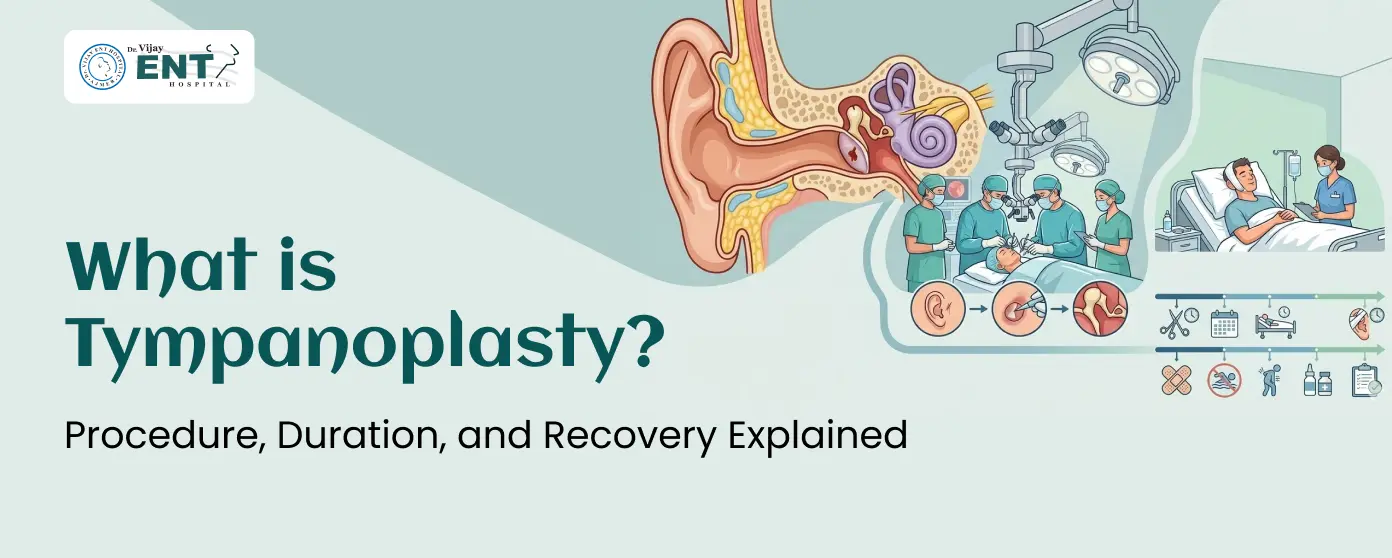
Being born as a human is a privilege, but not necessarily for everyone, especially when 20% of the global population is suffering from some degree of hearing loss. Such situations demand prompt action, care from the outset, and extensive knowledge of the disease for a timely cure. Tympanoplasty surgery is related to the ear, which is one of the most sensitive parts of the human body. Here, in this blog, we will discuss the tympanoplasty surgery, the side effects of ear surgery, and the tympanoplasty scar.
Tympanoplasty is a surgical procedure to treat a hole in the eardrum. It refers to a membrane that separates your ear canal from the middle ear. You can feel a vibration in your ears when sound waves strike them. It causes difficulties in hearing. The best way to cure this condition is to visit a certified ENT specialist. Dr. Vijay Gakhar is an exceptional surgeon who understands patients’ conditions and provides timely treatment for their problems.
Tympanoplasty surgery may be required to treat a perforated eardrum, which cannot be cured on its own. Here are visible signs that indicate your eardrum is not healing, including persistent hearing loss and drainage from the ear (otorrhea).
Generally, ear infections are more likely to develop in children who have ear tubes in their ears. Your physician may perform medical treatments to analyze the reasons that have led to a position where you need to opt for surgery.
The duration of tympanoplasty varies depending on the stage and severity. It may take as little as 30 minutes, or it can take a long time, up to 2 hours in a surgical procedure, depending on the complexity, method, and condition of the disease. There are a total of five types of tympanoplasty, starting from type 1 to type 5.
Type 1: Type 1 abnormality or myringoplasty involves grafting materials that repair the tympanic membrane without affecting the middle ear.
Type 2: In type 2, middle ear infections are treated that occur due to erosion of the malleus. The tympanic membrane is repaired and grafted into the malleus or incus.
Type 3: During type 3, the tympanic membrane is grafted onto the stapes head due to defects in the malleus and incus.
Type 4: The type 4 stage includes ossicular destruction and placing the graft onto the stapes footplate.
Type 5: This is the last stage where the stapes footplate becomes fixed.
Experts suggest that individuals or children suffering from tympanoplasty may face some symptoms or mild complications after the surgery. Moreover, tympanoplasty scars can also be visible. For this, watch out for these symptoms before the situation worsens:
Call your healthcare provider immediately if you have the following symptoms:
After any surgery, recovery is the most crucial aspect, and every patient’s recovery time varies from one another; there are various factors responsible for it. For tympanoplasty recovery, you need to take the following necessary precautions:
Remember, it’s completely normal if your sutures get wet, but make sure your ear canal stays dry for several weeks. For better protection, you can:
Tympanoplasty is an ear surgery, and you cannot take a risk with it. Therefore, it’s advisable to consult with an expert, and Dr. Vijay Gakhar is a renowned ENT specialist in India. He possesses practical experience of more than 20 years and is currently offering his services in Jaipur and Ajmer. If you want his expert guidance and consultation, then book an appointment today. Always remember that delays in medical treatments can even cost your life. So, if you detect persistent hearing loss symptoms, then visit your nearest healthcare provider for prompt care and quick recovery.

Dr. Vijay Gakhar is a renowned ENT specialist and expert Microtia surgeon in Rajasthan, India. Carrying the MBBS degree from the prestigious SMS Medical College, Jaipur, he holds specialisation with an MS in Otolaryngology ENT (Ear, Nose, and Throat) from Jawaharlal Nehru Medical College (JLN), Ajmer. Besides known for performing the best ear reconstruction surgeries, Dr. Gakhar grabs expertise in all other ENT services such as Septoplasty, Myringoplasty, Nasal Endoscopy, Commando Surgery, and FESS (Functional Endoscopic Sinus Surgery), for over 20 years.