58-59 Balaji Nagar, St Stephen Circle, Makarwali Road, Ajmer, Rajasthan 305004


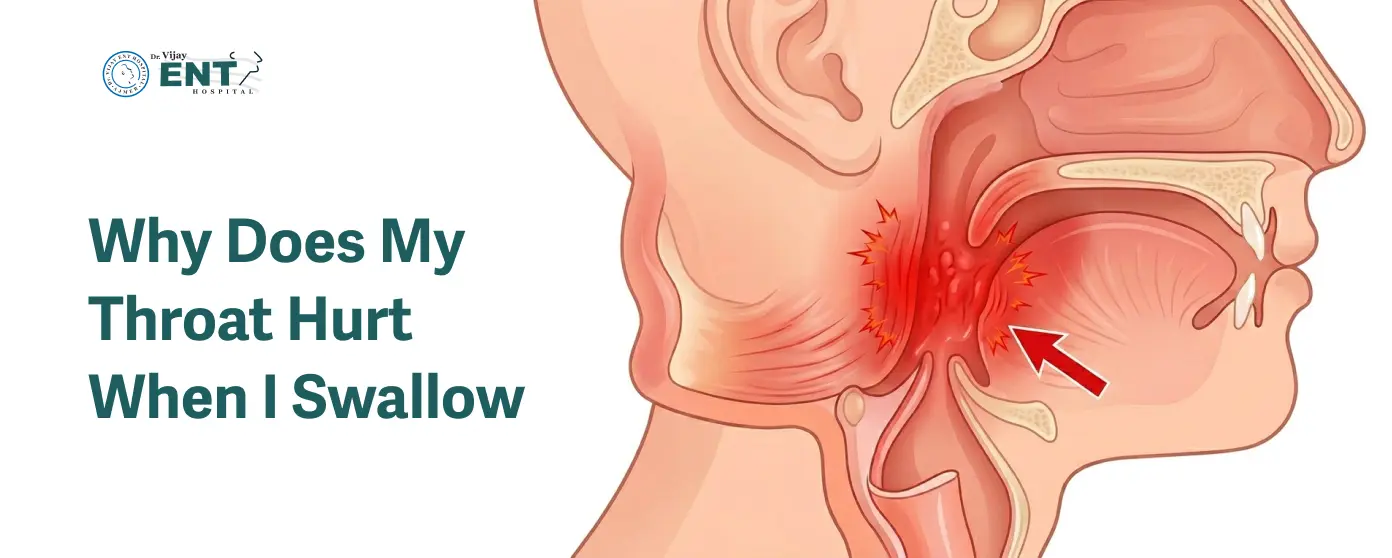
Do you feel anything like when you wake up from a deep sleep, and suddenly your throat starts hurting while swallowing water or food? Even after remaining silent for a long time, you feel a slight pain in the throat along with heaviness or roughness when you speak. If you’ve ever wondered, “Why does it hurt to swallow?” You’re not alone, because it happens to almost every person, usually caused by a sore throat (Pharyngitis). This often happens because of a viral infection, like the common cold or flu. Don’t worry, this could also be a minor infection that can be treated with medication. Despite this, you need to have a deep knowledge of this condition to ensure future prevention and avoid complications.
In this blog, we will take a close look at your condition, why does it hurt to swallow, or its causes, symptoms, and treatment options. Also, when should you be concerned, and how long does it take to recover from treatment? This blog will provide you with all the information you need.
This statement clearly shows that you have a sore throat. A sore throat is pain, scratchiness, or irritation of the throat that often worsens when swallowing. This isn’t a disease; it is a symptom of the viral infection, like a cold and the flu. Whether you are eating, talking, drinking, or swallowing, the throat pain is constant.
The sore throat is also called ‘pharyngitis’ in medical terms, in which ‘pharynx’ means throat, while ‘itis’ means swelling. It happens when the tissue lining your throat (mucosa) becomes inflamed. There are many causes of pharyngitis, including infections, allergies, and opening the mouth while sleeping. Sometimes sore throat symptoms are relieved with home remedies, while at other times they require guidance from an ENT specialist if they last for more than a week.
There are several causes of throat pain, including bacterial or viral infections, allergies, and a normal cold/flu. Let’s discuss the common reasons for throat pain when swallowing (sore throat):
Strep throat is a bacterial infection caused by the Streptococcus bacteria. It affects the throat by giving severe and sudden pain, especially when swallowing. This infection leaves the tonsils red, swollen, and sometimes patched with white spots.
The two oval-shaped pads of lymphoid tissue are located on both sides of the back of the throat, called tonsils. When it gets infected and inflamed, then tonsillitis occurs. This condition physically restricts the throat and creates intense pain while swallowing.
GERD occurs when the stomach acid comes back into food pipe (esophagus), which often creates a burning sensation called heartburn and acid reflux. When the acid reaches the throat, it damages the tissues, causing pain when swallowing.
In professions like teaching or anchoring, they have to speak all day, often feeling significant and constant pressure on the throat. Also, by yelling or screaming, a sore throat may occur. You may also experience it when you eat spicy food, drink irritant substances, and smoke.
Many people have the habit of sleeping while breathing with an open mouth, instead of breathing through their nostrils. Due to this, they have to face a sore throat, as the air directly hits the throat, making it dry and infected.
In most cases, the sore throat only happens due to viral infections like COVID-19, the flu, or a cold. These infections affect the upper respiratory tract, including the throat and nose, causing inflammation, pain, and irritation. Some of the infections get cured on their own in a few days with medications, while others require instant treatment and vaccinations.
Any physical damage, whether it is by accident or intentionally, that affects esophagus and lining of the throat, causes severe pain while swallowing.
Some examples of damage include eating sharp-edged food items like hard chips or toast.
Many people have this question ‘why does my throat hurt when I swallow, but I’m not sick’. There are several symptoms of throat pain, some strike suddenly like stabbing pain upon swallowing, while some develop gradually, like beginning as a mild scratchiness or dryness in the throat. Let’s have a discussion on some symptoms that may occur along with painful swallowing:
The lymph nodes in the neck or jaw become swollen, as they have to bear infections. These glands act as filters, catching bacteria, viruses, and other infections, which can cause them to become swollen, tender, and painful.
When you see white patches or yellow pus on the tonsils, it indicates bacterial infection, such as strep throat. This makes swallowing uncomfortable and painful.
If you feel any change in your voice, such as raspy, muffled, or hoarse. Then it is a symptom of a sore throat. It happens because of the inflammation or irritation in the larynx (voice box).
Fever higher than 101° or overall body aches are symptoms of a sore throat, because they indicate an infection like influenza (flu) or severe viral illness.
If you experience severe symptoms like a cough and runny nose, it could be a sign of a sore throat, allergies, or an infection like a cold, flu, or respiratory syncytial virus.
The ear and throat are connected. If you feel intense pressure or pain in your ear, it could be a sign of a sore throat, as inflammation in the throat causes pain.
Generally, if the sore throat is due to a common cold and fever, it gets cured on its own within a week with fewer medications and precautions. However, if the pain lasts longer than a week, then you have to be concerned about it. You may encounter other severe problems, where you need to get immediate medical attention from an expert ENT doctor:
A throat pain is diagnosed by an expert ENT doctor. The doctor asks about your symptoms. Later, they perform a physical examination based on your symptoms, including examination of your throat, ears, and tongue. They notice redness, swelling, and white patches in the physical examination. If a bacterial infection, such as strep throat, is detected, then the doctor uses throat culture and antigen tests. At last, the overall test results determine what type of treatment you need.
Here is the explanation of the diagnostic methods:
In physical examination, an ENT doctor uses a medical light or a tongue depressor to detect swelling, white patches, and throat inflammation.
It is a clinical assessment in which the healthcare provider inspects or palpates the neck to identify swollen lymph nodes.
Antigen test is a the diagnostic tool by which the ENT doctor detects strep bacteria from the throat.
Throat culture is a diagnostic test in which healthcare providers use a cotton swab to collect cells from the back of the throat to identify infection and bacteria that cause strep throat.
Pain when swallowing is a sign of a sore throat, and it can be treated with various treatments, including home remedies and medical interventions. Let’s discuss the most effective treatments for throat pain:
You need to use antibiotics only if the doctor detects bacterial infection (strep throat) in your throat through a test. Antibiotics are not advised for normal viral infections.
There are three pain relievers, including Acetaminophen (Tylenol), ibuprofen (Advil, Motrin), or naproxen (Aleve), that can reduce pain and cure inflammation.
If the pain is related to an allergy or postnasal drip, the antihistamine medication can help reduce pain.
In the condition of acid reflux, antacids help reduce heartburn and a sore throat. Moreover, you can avoid taking heavy meals before bed to avoid acid burns.
For severe throat pain conditions, your healthcare provider may prescribe a helpful mouthwash, also known as magic mouthwash. The mouthwash contains effective substances such as lidocaine, Benadryl, and Maalox, which help relieve throat pain.
Take 4-8 ounces of lukewarm water and dissolve half a teaspoon of salt in it. Gargle with this water and then spit it out. Repeat this process until the water is gone. This provides relief from sore throat pain and hoarseness.
Take a spoonful of honey with water or directly into the mouth to coat the throat. Honey is a natural, antibacterial, and soothing agent that helps to reduce throat pain.
For temporary relief, you can take ice cream, ice chips, and popsicles to numb the throat. This reduces throat pain temporarily.
Many herbs, like licorice root (gargling or drinking), peppermint, and chamomile tea, have properties that reduce swelling, pain, and irritation in the throat.
Strictly avoid cigarettes, alcohol, and spicy/acidic food. It helps you to reduce inflammation, soothe irritation, decrease pain, and speed up recovery.
There’s a proverb saying, “prevention is better than cure.” This should make you understand that there are many ways to prevent a sore throat, because once it occurs, it can cause severe pain and many other problems. Here are the prevention methods:
To prevent bacterial infections, you need to maintain hygiene. The hygienic rules include washing hands frequently, especially after sneezing or being in public, and avoiding sharing personal accessories like towels, glass, and food. Also, use sanitizer to kill bacteria on hands.
Use a vaporizer or humidifier in your house, especially in the bedroom. This helps to maintain air humidity, as dry air may cause a scratchy throat. Stay away from irritants like smoke and air pollution, as they can irritate or inflame the throat.
Drink liquid like warm tea, juice, or warm water. It helps to keep the throat moist. In food, maintain a balanced diet with fruits and vegetables. Avoid eating junk and spicy food.
If you’re in a profession like a teacher, where you have to speak continuously, then it is advisable to take a break from that profession for a few days. Avoid yelling, screaming, or talking loudly to prevent vocal cord strain.
As prescribed, gargle with salt water daily, and take proper medications daily. Furthermore, steam inhalation is also a precaution that gives throat relief.
Maintain distance from individuals who have already developed symptoms such as a cold, flu, or fever to prevent bacterial infection and throat pain.
Sore throats caused by viral infections like cold, fever, or the flu usually last 3 to 10 days. If it is a bacterial infection, such as strep throat, it may take 10 days to fully recover, but only if you take the proper medications.
If the pain when swallowing lasts longer than a week, with severe pain, irritation, or swelling, you need to seek immediate medical attention. In this case, you should consult with an ENT specialist, where you can receive proper and effective treatment for your ear, nose, and throat conditions. Because of their expertise, they provide personalized treatment plans for complex ENT issues.
So, I think you get the answer to your question ‘why does it hurt to swallow?’ Pain while swallowing is very common, as it can occur due to viral infections like a normal cold, flu, or fever. However, you need to pay attention to it when it goes beyond normal pain, because it may indicate a more serious underlying condition that requires medical attention. The serious condition includes esophagitis and cancer. In cases like a normal sore throat condition, you can take prescribed medications and antibiotics, while in serious cases, if your symptoms persist or worsen, it’s important to consult a qualified ENT specialist for proper diagnosis and treatment.
If you are not sick but still your throat hurts, then it is often caused by environmental irritants, allergies, or lifestyle factors like dry air, smoking, shouting, or mouth breathing while sleeping.
Painful swallowing can be serious if it is severe, persistent, or accompanied by difficulty breathing.
Yes, GERD (gastroesophageal reflux disease) causes throat pain by causing acid to flow back up, leading to irritation or inflammation in the throat.
Strep throat indicators include sudden, severe sore throat, pain when swallowing, fever, and swollen lymph nodes in the back of the throat.
To get faster relief from throat pain, you need to follow some rapid-acting methods, including gargling with warm salt water, using OTC pain relievers, and using anesthetic throat sprays or lozenges.

Dr. Vijay Gakhar is a renowned ENT specialist and expert Microtia surgeon in Rajasthan, India. Carrying the MBBS degree from the prestigious SMS Medical College, Jaipur, he holds specialisation with an MS in Otolaryngology ENT (Ear, Nose, and Throat) from Jawaharlal Nehru Medical College (JLN), Ajmer. Besides known for performing the best ear reconstruction surgeries, Dr. Gakhar grabs expertise in all other ENT services such as Septoplasty, Myringoplasty, Nasal Endoscopy, Commando Surgery, and FESS (Functional Endoscopic Sinus Surgery), for over 20 years.