58-59 Balaji Nagar, St Stephen Circle, Makarwali Road, Ajmer, Rajasthan 305004

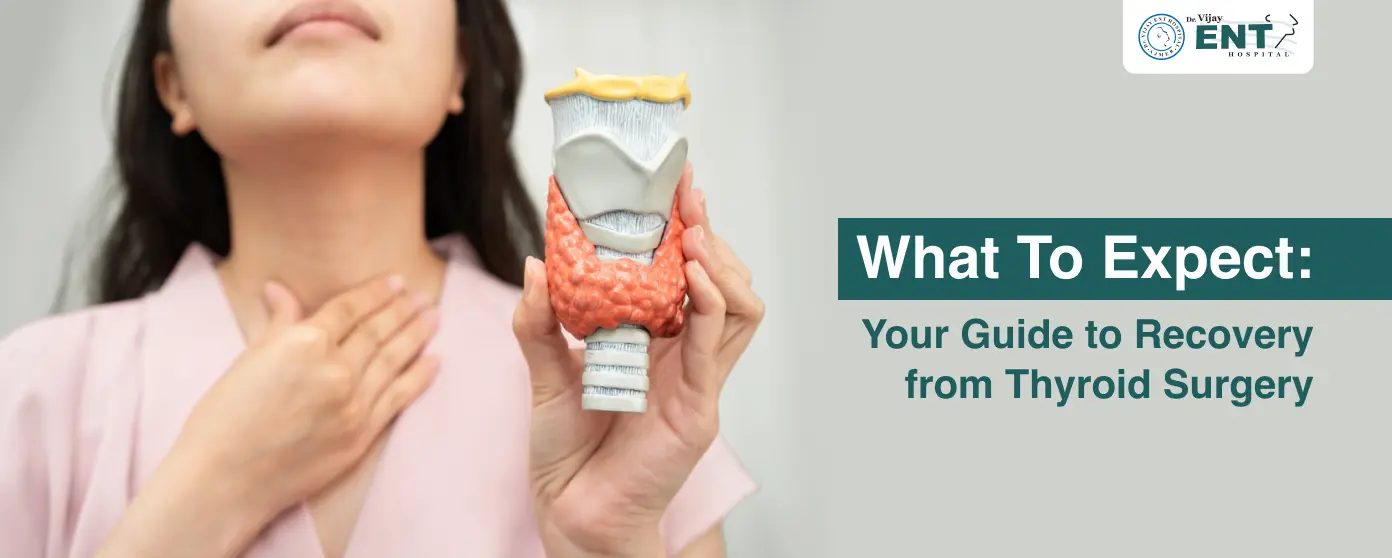
Thyroid surgery is also known as a thyroidectomy. It is a surgical process to remove all (total) or part (partial/lobectomy) of the thyroid gland (butterfly-shaped, located in the neck). Primarily, it treats conditions like thyroid cancer and certain thyroid conditions, including thyroid nodules, Goitre, or Hyperthyroidism.
If you’re also suffering from these kinds of thyroid conditions and are close to having surgery, or have already gone through it. Then this blog is for you, providing a complete guide to recovery from thyroid surgery, including post-surgery diet and lifestyle, the recovery process, and more.
Thyroidectomy usually takes 2 hours to complete, depending on the complexity and type of procedure. During surgery, the surgeon uses anaesthesia to put you completely to sleep, allowing for a painless surgery. However, how do you feel after surgery? If you have already gone through it, then you know, but for those who are about to undergo the procedure, here is what you expect after it:
After a successful Thyroid surgery, you will feel these common symptoms:
It is very common to have a sore throat after surgery, mainly caused by the endotracheal tube used during anaesthesia. You will feel a scratchy throat, pain while swallowing, and a feeling of something stuck in your throat. This is temporary; it usually lasts a week.
Almost 80% of patients experience neck pain or swelling, which is common and usually caused by the healing of internal muscles. Furthermore, hardness or tightness around the incision is also common. These symptoms reach their peak in the first 24 hours after surgery, then gradually improve.
The body uses energy to heal after surgery, and changes in thyroid hormone levels can take time to return to normal. As a result, feelings of sadness, apathy, and low energy are common. These symptoms are usually more severe during the first week but then gradually subside.
A hard or pink/red scar may form upon the incision. However, it is part of the healing process that may take weeks or months to soften. You need to keep your wound away from direct sunlight to prevent extra darkness over it, especially in the first year.
Your body needs medication to help balance itself during hormonal changes. When the thyroid is removed, your body can’t produce its own hormones. Due to this, you need to face low energy, weight gain, or dry skin symptoms.
First, discuss about dietary factors after thyroidectomy surgery:
The thyroid glands produce hormones (T3, T4) that play a vital role in your body, helping in digestion and regulating heart, brain, and muscle function. After a total thyroidectomy, you lose your thyroid gland, which means the body no longer produces hormones. Here, diet may help you to fulfil the need for hormones:
Moreover, cool food items like ice cream also soothe the throat.
Hard, crunchy, and acidic food items like:
These food items can scratch or burn the throat.
After a few days or weeks, the throat gets slightly improved, so start taking:
Plant-based proteins like lentils and tofu
These food items contain nutrition, high protein, and high fibre that support healing.
Surgical pain and discomfort only last for 1 or 2 months, and you can take your normal diet after this, but make sure to consult with a specialised doctor. However, here are a few things regarding diet that you must be aware of:
The recovery process of thyroid surgery takes time. Here are the comprehensive points of each stage of the surgery:
Thyroidectomy is primarily helpful in treating thyroid-related problems, but in some cases, patients may experience complications even after surgery, requiring immediate evaluation by a specialist. Let’s discuss some of the complications that warrant a doctor’s visit:
Thyroid surgery isn’t just a procedure to treat thyroid conditions; it is also a lifesaving process that removes cancerous tissues. During this surgery, you may feel some discomfort like a sore throat, stiff neck or difficulty in swallowing, but as the saying goes, ‘everything takes time’, so these complications will gradually subside with time and will result in a successful recovery.
To have a successful thyroid surgery, you need to consult with a specialised surgeon.

Dr. Vijay Gakhar is a renowned ENT specialist and expert Microtia surgeon in Rajasthan, India. Carrying the MBBS degree from the prestigious SMS Medical College, Jaipur, he holds specialisation with an MS in Otolaryngology ENT (Ear, Nose, and Throat) from Jawaharlal Nehru Medical College (JLN), Ajmer. Besides known for performing the best ear reconstruction surgeries, Dr. Gakhar grabs expertise in all other ENT services such as Septoplasty, Myringoplasty, Nasal Endoscopy, Commando Surgery, and FESS (Functional Endoscopic Sinus Surgery), for over 20 years.