58-59 Balaji Nagar, St Stephen Circle, Makarwali Road, Ajmer, Rajasthan 305004


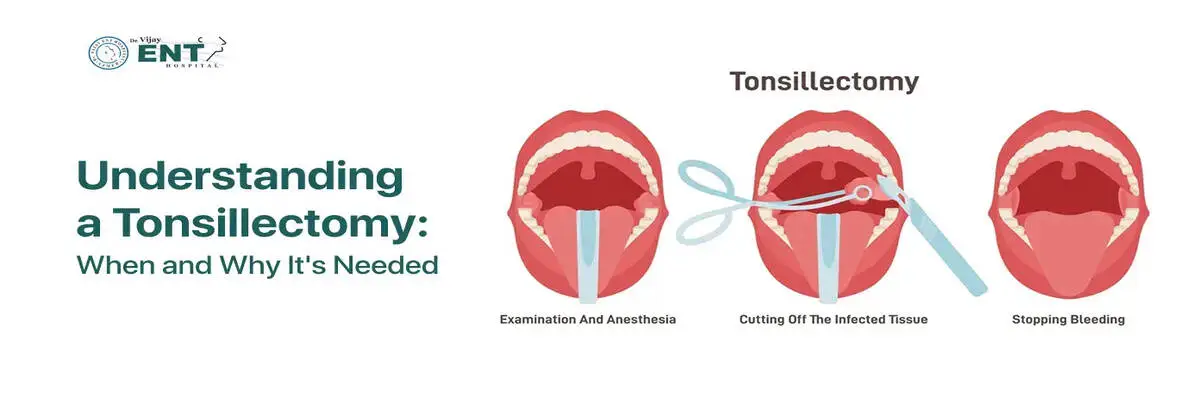
Tonsillectomy is a surgical procedure to treat chronic and recurrent tonsillitis, which is commonly caused by viral and bacterial infections. You may feel severe inflammation and swelling in the tonsils. To treat this, your healthcare provider may recommend tonsillectomy surgery. For better clarification or understanding, keep reading this blog.
Tonsillectomy is a common surgical procedure to remove infected and enlarged tonsils (round, fleshy masses in the back of your throat). Tonsils are part of your immune system and are present on both sides of your throat.
These oval-shaped tonsils protect your body by filtering out germs, producing white blood cells, and developing immunity. They are positioned in such a way that they play a vital role in fighting infections.
Sometimes, they get inflamed and cause painful sore throats. Also, it makes breathing difficult while sleeping. This significantly indicates that you need a tonsillectomy.
Tonsillectomy is a surgical process that is required for the following reasons:
1. Recurrent & Chronic Tonsillitis
It is the most common reason for tonsillectomy, where the tonsils become inflamed, swollen, and infected repeatedly. It causes painful throat infections, high fevers, and swollen neck lymph nodes.
2. Obstructive Sleep Apnea (OSA) and Breathing Problems
OSA and breathing problems are common reasons for tonsillectomy in children. When the tonsils become too large and block the airways during sleep, they can cause loud snoring, gasping, or pauses in breathing.
3. Tonsil Stones or Bad Breath
Sometimes, hard deposits of bacteria, food particles, and dead cells gradually accumulate in the crevices of the tonsils, forming small, white, and foul-smelling stones. This causes bad breath and a feeling of something getting stuck in the throat.
4. Peritonsillar Abscess
In this condition, a pocket of pus forms near the tonsil, which causes infection. Thus, later results in severe throat pain, high fever, and difficulty opening the mouth.
5. Suspicion of Cancer and Tumour
If you observe that your tonsil is larger than the others and you feel unusual growth or an ulcer on one side, then this can be the reason a doctor recommends tonsillectomy.
The doctor first checks the patient’s health and whether they are fit enough to undergo surgery. Your healthcare provider may prescribe certain medications that you need to take before surgery or give you instructions that will help you prepare.
1. Your healthcare provider gives you anaesthesia to keep you asleep, making the surgery pain-free.
2. Next, they remove your tonsils, but as you’re asleep, you won’t feel anything, not even the pain. They use various methods to perform tonsillectomy.
3. The tonsillectomy process usually takes 30 to 45 minutes to complete. However, some cases can take longer, such as combined procedures with adenoidectomy and tonsillectomy.
4. After successful surgery, you will get various benefits, such as:
5. Apart from the benefits, the surgical procedure may also include some risks, including:
A tonsillectomy is usually somewhat painful, especially for adults. However, this is common and subsides within a week or two. Patients typically describe this pain as a sore throat, accompanied by pain in the jaw, neck, and ears. To reduce pain, your healthcare provider will give you medications and instructions to help with pain relief.
Just after surgery, your doctor or surgeon will transfer you to the recovery area, where they will check your vital signs and ensure there are no complications.
Generally, you are allowed to go home on the same day of surgery. But in case complications arise, your healthcare provider will keep you in the hospital for a full day to check progress.
In most of the surgical processes, the recovery time is up to 2 weeks. It will depend on your surgery type, your body’s healing ability, and any complications.
You won’t get relief immediately after surgery; it heals gradually:
First 2 or 3 days:
3 to 5 Days
After 5 to 10 days
If you are suffering from tonsillitis, tonsil stones, or any kind of recurring throat infection, then you must consult with an ENT surgeon for tonsillectomy.
While after a tonsillectomy, if you face any of the following problems, then you must call your healthcare provider:
Tonsillectomy is a common surgical procedure to treat chronic infections and tonsillitis. If you and your child are facing tonsil-related issues, you should contact an expert ENT doctor. Whether the condition is normal or severe, early diagnosis and treatment can prevent further complications.
Yes, tonsillectomy is generally considered a safe and common surgery. Like any surgical procedure, it carries some risks, but serious complications are rare when performed by an experienced ENT surgeon.
Tonsillectomy can be done in both children and adults. However, it is more commonly performed in children who experience frequent tonsil infections or breathing problems during sleep.
Most people recover within 10 to 14 days. However, full healing may vary depending on age, overall health, and how well post-operative care instructions are followed.
Avoid spicy, acidic, crunchy, and hard foods during recovery. Stick to soft and cool foods like soups, yoghurt, ice cream, and mashed potatoes to prevent irritation.
No, tonsillectomy is usually recommended only for recurrent or severe cases of tonsillitis that do not respond well to medications or significantly affect quality of life.
You should seek medical attention if you experience heavy bleeding, high fever, severe dehydration, persistent vomiting, or difficulty breathing after surgery.

Dr. Vijay Gakhar is a renowned ENT specialist and expert Microtia surgeon in Rajasthan, India. Carrying the MBBS degree from the prestigious SMS Medical College, Jaipur, he holds specialisation with an MS in Otolaryngology ENT (Ear, Nose, and Throat) from Jawaharlal Nehru Medical College (JLN), Ajmer. Besides known for performing the best ear reconstruction surgeries, Dr. Gakhar grabs expertise in all other ENT services such as Septoplasty, Myringoplasty, Nasal Endoscopy, Commando Surgery, and FESS (Functional Endoscopic Sinus Surgery), for over 20 years.