58-59 Balaji Nagar, St Stephen Circle, Makarwali Road, Ajmer, Rajasthan 305004

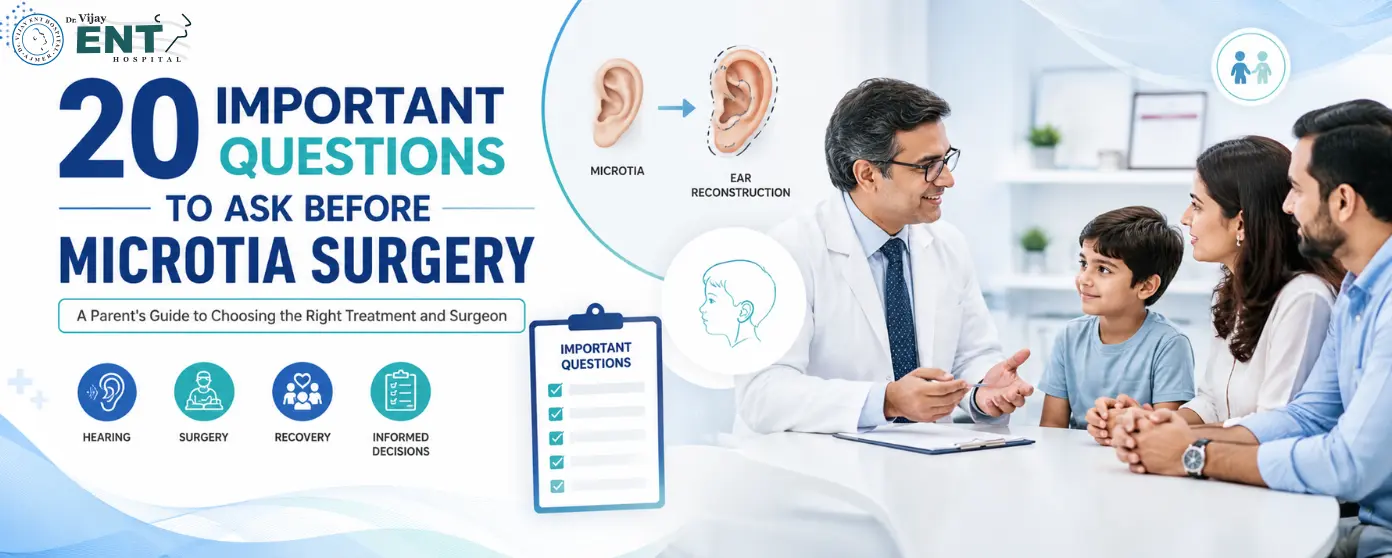
Microtia is a condition where a baby is born with an underdeveloped, missing, or small outer ear. Globally, microtia is considered a rare congenital condition affecting a small percentage of newborns worldwide. Due to its low prevalence, treatment options for microtia are also limited globally. Especially in India, there are only a limited number of ENT specialists available, of whom only a small proportion are experts in microtia treatment.
Due to the limited availability of highly experienced microtia specialists, microtia surgery is considered a highly specialised and sensitive procedure that requires careful planning and expert surgical care. As a result, parents often have many concerns about treatment, recovery, hearing outcomes, and long-term results. Asking the right questions before surgery can help families make informed decisions and feel more confident about their microtia treatment journey.
Microtia is a congenital ear condition where a child is born with an underdeveloped or missing outer ear. This primarily affects the outer ear appearance and shape of the baby’s ear, but in some conditions, it may also cause hearing loss.
Grade 1: You will notice some minor changes in the child’s ear, and that ear will be slightly smaller than the normal ear.
Grade 2: In this grade, the structure of the baby’s upper ear is affected, and the ear canal may also appear narrow.
Grade 3: The most common form of microtia, in which the baby’s ear and ear canal are completely affected.
Grade 4: In grade four, the outer ear is completely missing (anotia).
According to experienced microtia reconstruction specialists, the most appropriate treatment depends on factors such as the child’s age, severity of microtia, hearing status, ear anatomy, and overall treatment goals. A personalised treatment plan helps achieve the best cosmetic and functional outcomes. To understand the complete treatment process, parents can also learn more about available microtia treatment options.
Ear prosthetics: A custom-made artificial ear (usually crafted from silicone) designed to replace a missing, underdeveloped, or severely affected outer ear.
Reconstruction Surgery: A specialised plastic surgery to reshape or create a new external ear. For severe cases such as Grade 3 and Grade 4 microtia, ear reconstruction surgery using rib cartilage or synthetic frameworks may be recommended.
Bone Anchored Hearing Aid (BAHA): If microtia affects the ear canal and the child faces problems in hearing, then BAHA (surgically implanted devices) is used to restore hearing.
Because microtia affects children from birth, parents often have many questions regarding treatment and long-term outcomes. Since children are sensitive and vulnerable, parents have the responsibility to ask important questions before surgery. So, here are the important questions related to the surgeon’s experience, surgical technique, risks and complications, and more that you need to ask:
Why it is important to ask: Microtia surgery requires a specialised approach and years of experience. It is important to choose a surgeon with substantial experience in microtia reconstruction and a proven track record of successful outcomes.
Why it is important to ask: Surgeons who primarily perform microtia surgery have more specialised skills and experience to perform this surgery successfully than surgeons who perform it infrequently.
Why it’s crucial to inquire: You should consider a surgeon who has operated on many cases of microtia using different techniques, rather than one who only does 2 or 3 cases a year.
Why this question matters: A skilled surgeon will proudly showcase previous surgeries and high-quality, real-life work done on children with microtia.
Why you need to ask: This helps parents understand whether their child has reached the appropriate age and developmental stage for reconstruction surgery.
Purpose behind the question: There are usually 2 reconstruction techniques: Rib Cartilage Reconstruction and Synthetic Framework Reconstruction. The surgeon recommends one of these techniques based on the baby’s age, tissue quality, defect type, and lifestyle.
Why is it important to ask: Whether the surgeon performs the rib cartilage method or synthetic framework method, the answer changes everything about your child’s surgery, from how much pain they will have to how they will play sports for the rest of their life.
What are your personal complication rates for the specific reconstruction method you are recommending?
Why it matters: Knowing your surgeon’s personal complication rate for the specific method gives you a realistic expectation of safety. As rib cartilage grafts carry risks of chest donor site pain or scarring, while implants carry a lifetime risk of implant exposure or extrusion.
Why it is important to ask: Exposed or infected frameworks are critical complications that require immediate medical intervention.
Why this question matters: If a surgeon recommends the rib cartilage technique, then the portion of the child’s rib cartilage is harvested, which may cause pain. Understanding the surgeon’s pain management approach can help parents prepare for recovery and ensure their child remains comfortable after surgery.
Why it matters: Microtia usually causes hearing loss due to the missing or affected ear canal. Understanding the degree of hearing loss helps parents make informed decisions about hearing rehabilitation and long-term communication development.
Why it matters: With canalplasty, a new ear canal can be created, but it requires middle ear bone structures. And this helps in improving hearing.
Why it matters: Bone conduction hearing implants bypass the missing ear canal and send sound directly to the inner ear.
Why it matters: The timing of hearing rehabilitation and ear reconstruction can affect treatment planning. Understanding the recommended sequence helps parents prepare for the overall treatment journey.
Why it matters: In some cases, conductive hearing loss may also be treated with Bone Conduction Hearing Aids (BCHAs).
Why it matters: Rib cartilage surgery harvests cartilage from ribs that cause pain at both the chest and ear sites, while Medpor or implants only affect the head. So, it is crucial to have a pain management plan before it occurs.
Why is it important to ask: It is essential to know the proper wound care and dressing instruction to prevent infection or any serious problem.
Why you need to ask: If you catch the early signs of infection and graft rejection, you can protect the final cosmetic result by detecting complications early.
Why it matters: If your child is involved in sports or any physical activity, there’s an increased risk of injury and dislocation of the newly formed ear framework. This could even lead to the need for repeated surgeries.
Choosing the right surgeon is one of the most important decisions in your child’s microtia treatment journey. If you are looking for an experienced microtia surgeon in India, it is important to evaluate the surgeon’s expertise, experience, and treatment outcomes.
An experienced microtia specialist should evaluate each child individually and create a treatment plan based on their specific needs. Early consultation and proper guidance can help families make confident decisions and achieve the best possible functional and cosmetic outcomes.
Surgeons typically perform microtia reconstruction when the child reaches the recommended age and physical development required for the chosen technique.
Yes. Many children with microtia also have abnormalities of the ear canal that may cause conductive hearing loss.
Experienced microtia reconstruction specialists perform this procedure safely in most cases, although every surgery carries some risks and potential complications.
Recovery varies depending on the reconstruction technique used, but most children require several weeks before returning to normal activities.

Dr. Vijay Gakhar is a renowned ENT specialist and expert Microtia surgeon in Rajasthan, India. Carrying the MBBS degree from the prestigious SMS Medical College, Jaipur, he holds specialisation with an MS in Otolaryngology ENT (Ear, Nose, and Throat) from Jawaharlal Nehru Medical College (JLN), Ajmer. Besides known for performing the best ear reconstruction surgeries, Dr. Gakhar grabs expertise in all other ENT services such as Septoplasty, Myringoplasty, Nasal Endoscopy, Commando Surgery, and FESS (Functional Endoscopic Sinus Surgery), for over 20 years.