58-59 Balaji Nagar, St Stephen Circle, Makarwali Road, Ajmer, Rajasthan 305004


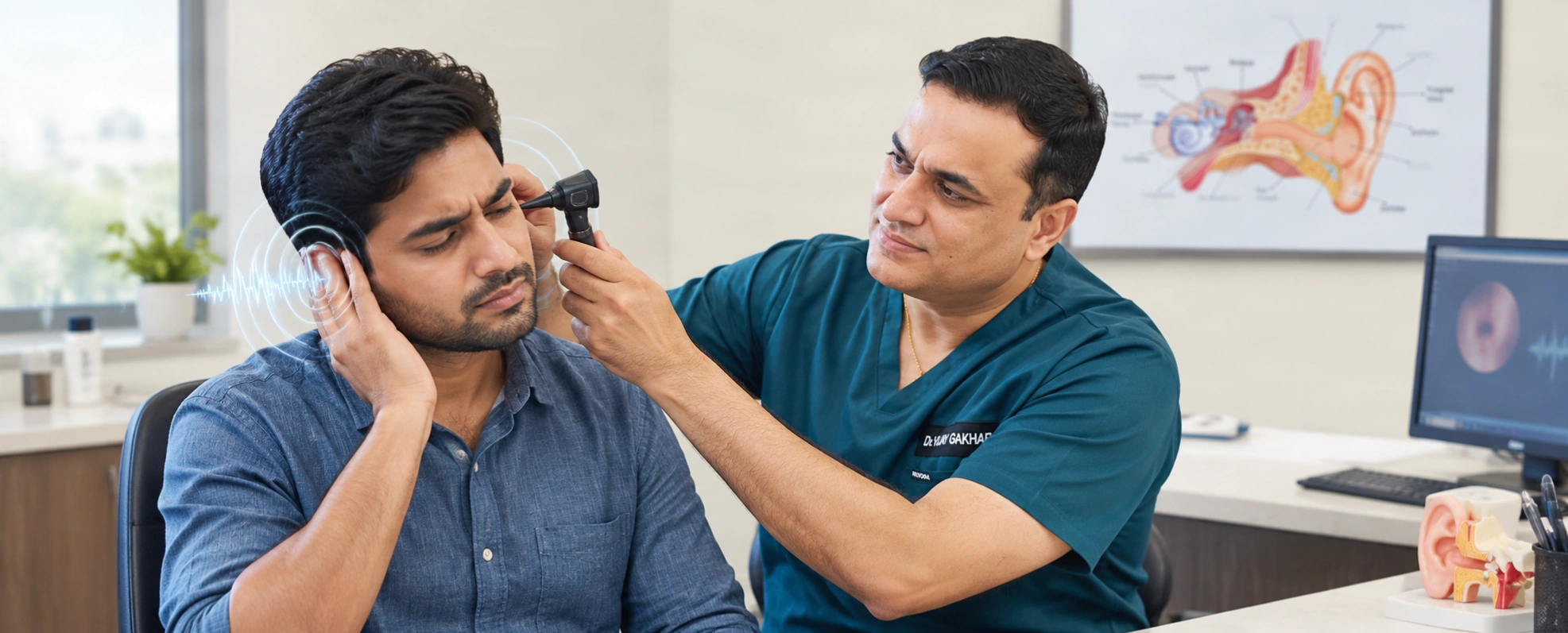
Tinnitus is the perception of ringing, buzzing, humming or other sounds in the ears when no external sound is present.
It is common — research involving most adults found that around one in five people experience tinnitus, with prevalence increasing with age. For some people it is a mild annoyance; for others, it can affect sleep, concentration and daily well-being.
Tinnitus is not a disease in itself — it is a symptom. It often indicates something else is happening in the auditory system, such as hearing loss or changes in how the ear or brain processes sound.
The most common type is subjective tinnitus, which can only be heard by the person experiencing it. Less common is objective tinnitus, where sounds originate from vascular or muscular activity and can sometimes be detected with specialized equipment.
The sounds vary from person to person — some hear ringing, others buzzing, humming or whooshing. It may be constant or come and go, and can affect one or both ears. Tinnitus can have many causes, which is partly why it affects people so differently. Common causes of tinnitus include:
In some cases, subtle changes in auditory processing may be present that standard hearing tests do not capture, and in others no clear cause is identified at all. This is why a proper assessment by an audiologist is important — they can help determine what is contributing to your tinnitus and what to do next.
People who have tinnitus could be more sensitive to noise in the environment such as in a noisy restaurant or bar with loud music. Some people might begin to avoid such places. Tinnitus can lead to problems with concentrating, sleeping and emotional well-being. If left untreated, ringing within the ears can lead to:
Some people are able to ignore their tinnitus most of the time. Leaving it untreated for a long time may also have a serious effect on your life and well-being.
The ENT specialist will ask about your medical history and symptoms.
Diagnosing tinnitus begins with a hearing evaluation — a thorough assessment of your hearing done by an audiologist or ENT specialist. The evaluation will help determine whether any hearing loss is conductive (associated with the outer or middle ear), sensorineural (associated with the inner ear or auditory nerve), or a combination of both. This shapes the treatment plan. During your hearing evaluation, an audiologist will:
Note: Sudden hearing loss accompanied by tinnitus needs urgent medical assessment.
Tinnitus is a medical term for ringing in the ears; it’s a condition that only you can hear and no one else is aware of. Some types of tinnitus can feel like a gentle pulsing, and others may be a noisy buzzing sound that blocks out different noises to your surroundings. Without any treatment, tinnitus can cause concentration and sleep problems and may be irritating to cope with on an everyday basis.
Your doctor may also recommend sound therapy. Sound therapy includes the use of a transportable tool, for instance for example by your bedside at night, that produces calming sounds. During the day you may wear a device on your ear like a hearing aid that produces a steady low-stage noise or tone. Tinnitus sound therapy may also help mask your tinnitus or distract you from it.
Hearing aids can help people who have tinnitus along with hearing loss. By amplifying surrounding sounds, they may make tinnitus less noticeable. Some hearing aids also include sound therapy features. An ENT specialist can help you to determine suitable hearing aids.
Tinnitus can cause anxiety, disrupt your life or prevent you from doing the things you enjoy. Your ENT specialist can also recommend cognitive behavioural therapy (CBT). The purpose of CBT is to help you think otherwise about the situation and adopt a more positive attitude. Many patients find CBT eases their symptoms and improves their quality of life.
Surgery is not always performed for tinnitus itself. But it could be used to deal with any underlying situation, for instance if there is a physical problem such as a growth near the ear.
Complementary treatment options are not a part of conventional medical treatment. Some that have been used for tinnitus include: hypnosis, acupuncture, natural treatments, dietary supplements, and nutritional modifications. There is little medical evidence that these techniques work. Acupuncture includes setting fine needles into your skin at precise points. Make sure you use a certified practitioner. Some dietary supplements may have side effects or interact with other drugs. Check with your doctor before starting to take them.
Some people with tinnitus say that cutting out caffeine, alcohol or added salt helps lessen their tinnitus. But there is not enough strong evidence to support doing this. If you want to see if this helps, speak to your doctor or a dietitian first.
There are no specific drugs for tinnitus. But tinnitus may be worsened by depression or anxiety, which may be treated with drugs. So your doctor may also prescribe an antidepressant if they think it may help.
You should seek medical attention if:
Early intervention improves the success of tinnitus treatment and prevents long-term distress. If you are experiencing persistent ringing in your ears, consult an ENT specialist for an appropriate evaluation. At Dr. Vijay ENT Hospital, our team can assess your symptoms and guide you towards suitable treatment options.
It often results from localized problems like earwax buildup, a middle ear infection, fluid, Eustachian tube dysfunction, or jaw (TMJ) strain. Less commonly, it can signal uneven hearing loss, Ménière’s disease, or a nerve-related condition like an acoustic neuroma.
Tinnitus often feels worse at night because of a drop in background noise, heightened mental attention in silence, and end-of-day fatigue. Physical changes like blood flow adjustments or jaw tension while lying down. The real ringing typically does not get louder, however your mind notices it more.
Yes, both earwax buildup and hearing loss can cause ringing in the ears, a circumstance called tinnitus.
Researchers have shown that for some individuals, ringing in the ears may be caused by stress, and it may also worsen with stress. In fact, it is far from unusual that ringing in the ears begins during or after a period of stress or anxiety.
By avoiding triggers and improving general ear and cognitive function, tinnitus in many cases may be minimised. This can include sound remedy, hearing aids, stress relief, proper sleep, and noise masking. It can also be treated with hearing aids, or for balance problems. Larger facilities such as Neuroequilibrium use more advanced diagnostic strategies to identify causal factors and prescribe individualised treatment to achieve long-term relief.
Hearing aids can help when tinnitus is connected to hearing loss, but they may not be beneficial for everyone. Sound therapy can reduce awareness of ringing, especially in quiet environments, but relief can be temporary. CBT-based therapy can help reduce distress, anxiety, and sleep impact, but it does not eliminate the sound itself. Tinnitus retraining therapy can help with long-term habituation, but it requires consistency. Neuroequilibrium recommends choosing a treatment after audiometry, tinnitus assessment, and medical examination.
Medical Note: This article is intended for general information and does not replace a medical consultation or individual diagnosis.

Dr. Vijay Gakhar is a renowned ENT specialist and expert Microtia surgeon in Rajasthan, India. Carrying the MBBS degree from the prestigious SMS Medical College, Jaipur, he holds specialisation with an MS in Otolaryngology ENT (Ear, Nose, and Throat) from Jawaharlal Nehru Medical College (JLN), Ajmer. Besides known for performing the best ear reconstruction surgeries, Dr. Gakhar grabs expertise in all other ENT services such as Septoplasty, Myringoplasty, Nasal Endoscopy, Commando Surgery, and FESS (Functional Endoscopic Sinus Surgery), for over 20 years.