58-59 Balaji Nagar, St Stephen Circle, Makarwali Road, Ajmer, Rajasthan 305004

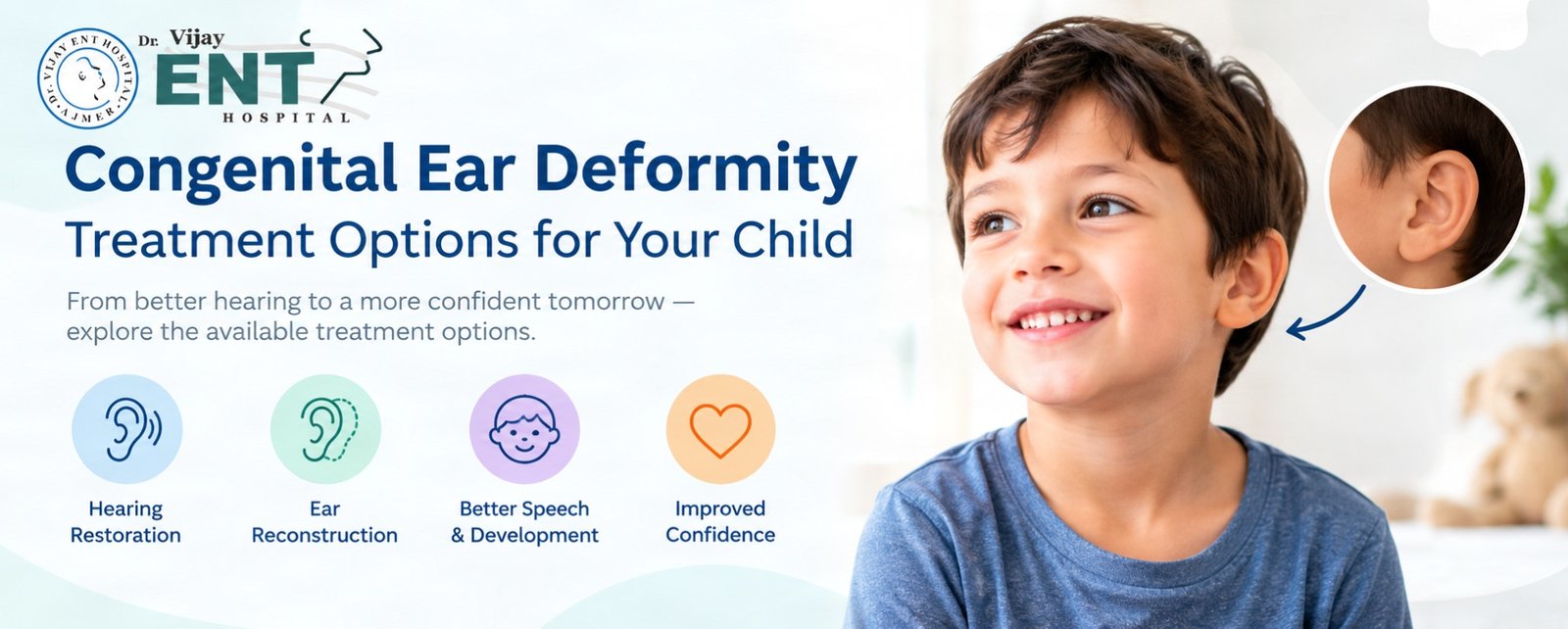
Parents who suspect that their child may have an ear deformity may be asking themselves, “What is microtia?” Microtia is a common congenital ear deformity that occurs when the outer ear does not develop correctly in the womb.
As a parent, you should know that many treatment options are available now that helps your children with congenital ear deformity and restore their hearing. Seeking early intervention from a congenital ear deformity surgeon can provide a child with the opportunity to thrive socially and academically. In this article, lets discusses what microtia, congenital ear deformity, and congenital ear abnormality are, how they impact hearing, what treatment options are available, and why it is important to seek care from an experienced congenital ear deformity surgeon.
It is also known as microtia and congenital ear abnormality, is a general term that describes any number of ear deformities that are present at birth. Microtia is the most common type of congenital ear deformity. Mostly known and derived from the Greek words “micro” meaning small and “otia” meaning ear. It (Microtia) occurs when the outer ear (pinna) does not develop correctly in the womb. Mostly, this can range from a mild deformity to the complete absence of the outer ear.
Microtia most commonly occurs during the first trimester when the pinna is forming. It is a relatively rare condition that occurs in approximately 1 in 5 to 10k births ratio. The condition primarily affects males more often than females, also generally occurs on the right side rather than the left. It is also common for it to affect just one side (unilateral) rather than both.
The inner ear is typically unaffected, which means the hearing capacity of the child is normal or near normal. However, the outer ear structures as well as the ear canal develop incorrectly in most cases. In many cases, the ear canal fails to open (aural atresia), this prevents sound from reaching the inner ear and resulting in hearing loss.
There are four grades of microtia:
As the child grows, they do not outgrow their microtia, although the recommended treatment options may change.
Many children with microtia have normal hearing in at least one ear. However, if the ear canal has not developed properly or the outer ear is missing, may not be able to reach sound in the inner ear normally. The effect on hearing can vary depending on how severe the microtia is.
Also, Some children may also have problems with the middle ear which can cause partial or complete hearing loss. Hearing loss can sometimes affect a child’s speech / language development / learning and social interactions. Thats why early hearing checks are mostly important and Newborn hearing screening, ABR testing, and regular hearing evaluations can help identify hearing problems early and allow treatment to begin sooner.
There are two major treatment options for children who are born with congenital ear deformity like hearing restoration and reconstructive surgery. Hearing restoration typically requires the use of a bone conduction device, while reconstructive surgery typically involves ear reconstruction using either cartilage from the patient’s own ribs or alloplastic (man-made) materials. Ear reconstruction typically begins mostly when the child is between the ages of 6 and 10, although some procedures can be performed earlier.
Here are some of the common ear reconstruction and hearing restoration treatments that may be recommended to your child:
Most children who are born with microtia benefit from the use of a bone conduction hearing device. This special devices help conduct sound through the bones of the skull directly to the inner ear, bypassing the malformation of the outer and middle ear. Softband bone conduction devices are typically recommended for infants and young children. The device use a soft headband to hold the sound processor in place. It can also be used for children old enough to tolerate adhesive patches behind the ear.
As the child grows, the bone conduction device can be upgraded to an Osseo integrated (surgically implanted) system. Mostly these systems use a titanium implant that is surgically placed in the skull to provide even better sound quality. Hearing restoration can begin at a very early age to support language development and academic success. Some children also benefit from auditory training and speech therapy that should be in surgeon supervision and ongoing progress.
Ear Reconstruction Surgery Ear reconstruction is typically recommended once the child reaches school age (approx 4-5 yrs). This allows the reconstructed ear to grow, develop in tandem with the child’s natural ear. Ear reconstruction surgery is a multi-step procedure that is typically begins with the creation of a framework for the ear using either autologous (patient’s own) cartilage or alloplastic materials.
There are some common ear reconstruction surgery options that may be recommended for your child include:
Surgery to correct microtia and other ear deformities is extremely specialized and should be performed by an experienced congenital ear deformity surgeon. An experienced congenital ear deformity surgeon understands the delicate balance between restoring hearing and reconstructing the outer ear in a manner that allows for normal development. They can also provide guidance on the best timing for various procedures to minimize disruption and maximize functional and aesthetic results.
Dr. Vijay Gakhar (ENT | MBBS, MS) is one of India’s leading congenital ear deformity surgeons. He has helped hundreds of patients from across the country restore their hearing and reconstruct their ears so that they can enjoy a fulfilling life free from the embarrassment of a malformed ear. With his extensive experience with ear reconstruction techniques such as autologous rib cartilage reconstruction (complete specialisation) has earned him a reputation as one of the most trusted congenital ear deformity surgeons across India. Patients across from all cities of India seek his care due to his personalized treatment plans, cutting-edge treatment options, and responsive communication style.
When seeking care for microtia or any congenital ear deformity, it is important to select a qualified congenital ear deformity surgeon. You should meet and ask for review before-and-after photos of previous patients, ask about his experience with similar procedures, and full treatment plan guidelines. It is also remember that ear surgery is a multi-step process that may requires multiple consultations before the actual procedure can be scheduled.
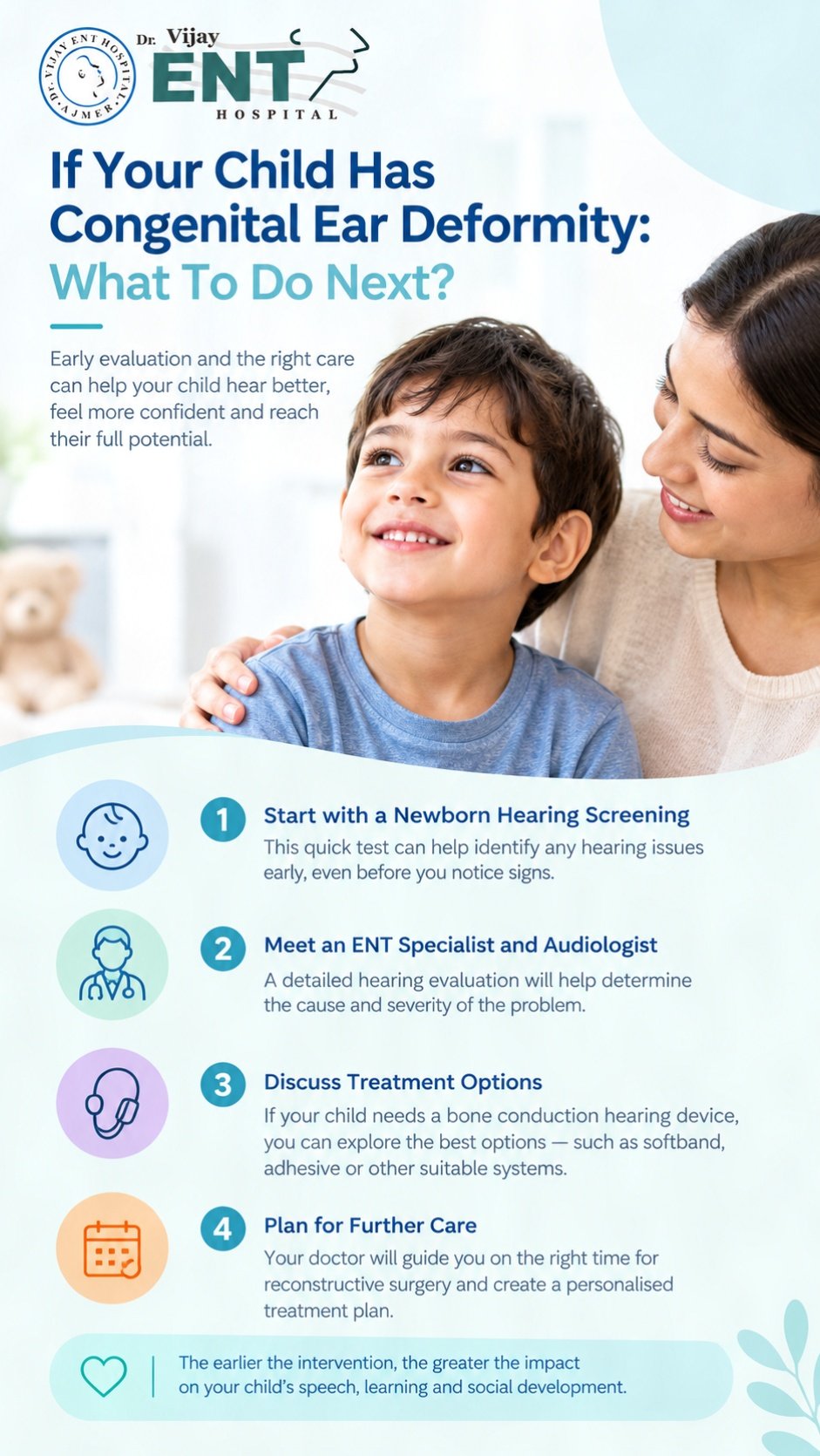
If your infant has a malformed ear or if you suspect that they may have hearing loss due to microtia, so it is important to meet an experienced congenital ear deformity surgeon as soon as possible. Ideally, a child may complete a newborn hearing screening and meet with an ENT specialist and audiologist for a comprehensive hearing evaluation and proper treatment which is initially required.
If requires a bone conduction hearing device after the consultation, you can discuss the use of softband or adhesive or any appropriate systems. It is never too early to begin the process of restoring hearing and correcting a malformed ear because early intervention can have a big impact on your child’s language development, academic performance, and socialisation for 360 degree improvements.
As far as treatment is concern, it is equally important to give emotional support to your children, about check their appearance or condition. Do open talk with your child at home that can help them to feel comfortable sharing their thoughts and asking questions. It also help your child for a better understanding of what to expect and how to feel. If your child has difficulty with speech or language, in that case speech therapy may also be helpful. Please note with the right care and support, most children born with microtia can grow up to live happy and fulfilling lives. Early treatment and surgery can always help to reduce the effects of microtia on both appearance and give your child greater confidence as they grow.
Microtia and other forms of congenital ear deformity are treatable conditions that can be corrected with early intervention. By pursuing early hearing assessments and interventions such as bone conduction hearing devices as well as reconstructive surgery when the time is right, many children can enjoy normal hearing and a more socially confident appearance. The most effective congenital ear deformity treatment options are available from a qualified congenital ear deformity surgeon.
If your child has congenital ear deformity, then you should meet with an experienced congenital ear deformity surgeon immediately. Also discuss more about available treatment options and problems that you are facing. Early intervention feel them more comfortable and confident.
Vijay ENT Hospital offers a wide range of treatment options for patients with microtia and congenital ear deformities. The qualified congenital ear deformity surgeons at Vijay ENT Hospital are available to help you learn more about your treatment options.
Microtia refers to any condition in which the outer ear is malformed. Anotia is the most severe form of microtia in which the outer ear is completely absent.
Yes! We can say, majorly who are born with congenital ear deformity experience hearing loss due to malformation of the ear canal and/or middle ear structures.
Ear reconstruction is typically performed when the child reaches school age (3-5 yrs), although some procedures such as the use of bone conduction devices can be performed much earlier.
Ear re-construction surgery for rebuilding the outer ear and improve its appearance. additionally, it usually does not improve hearing. However If hearing needs to be restored, other treatments may be needed, such as a bone conduction hearing device or surgery to open or repair the ear canal. Also, Hearing restoration procedures such as bone conduction devices or canalplasty may be necessary to restore hearing function.
Yes, but the level of risk depends heavily on why the surgery is being done, which rib/cartilage is involved, and what surgical technique used, it is all important to know. Because experienced congenital ear deformity surgeon, rib cartilage surgery is a safe procedure with excellent long-term results. Once the cartilage is removed from the patient’s own ribs, which means that the risk of rejection is virtually eliminated. Mostly, patients also report that the incision site heals relatively quickly and comfortably with little to no long-term discomfort.
While choosing a best surgeon, it is important to check references, review from real patients, their credentials, and ask about the full treatment plan as an enquiry before moving forward.
