58-59 Balaji Nagar, St Stephen Circle, Makarwali Road, Ajmer, Rajasthan 305004


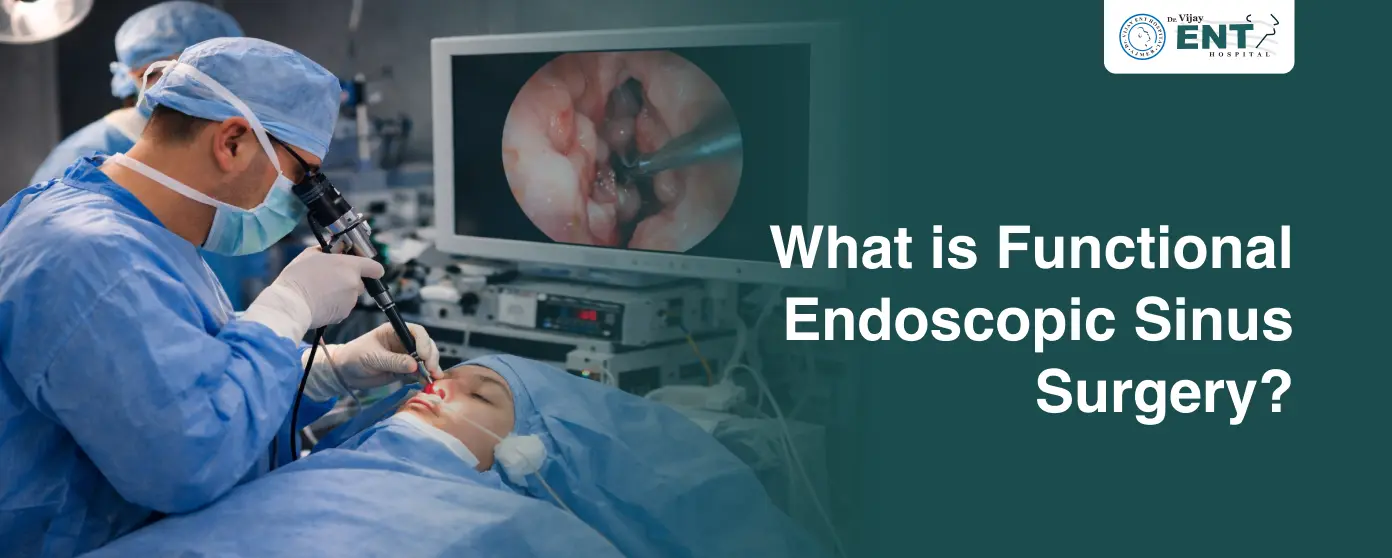
Our nose is the most sensitive and vital sensory organ of the human body. Often, there are times when most people are prone to nose diseases and sinusitis, or sinus is one of them. To treat this condition, ENT specialists perform functional endoscopic sinus surgery (FESS). It is a minimally invasive surgery that is used to treat chronic sinusitis and nasal polyps. If you want to understand more about FESS, keep reading this blog to learn more about endoscopic sinus surgery, its recovery, and things related to this surgery.
Functional endoscopic sinus surgery is performed to treat sinusitis. Your healthcare providers operate on your sinus conditions through your nostrils. This simply means there will be no cuts or incisions inside or around your nose that can leave visible scars. It is also termed endoscopic sinus surgery.
There are several types of sinus surgery. Based on your condition, your healthcare provider will recommend the appropriate surgery among the following:
Your ENT surgeon may recommend this surgery if the mucus doesn’t drain from your sinus or nasal cavity in its normal form. Moreover, you may observe nasal obstruction, which can be painful and make breathing difficult. In such scenarios, for immediate relief, you can take over-the-counter medicines (OTC) or nasal sprays. Even if the issues persist, you must consult your doctor and take the next steps forward as prescribed, such as surgery or remedies with medicines. FESS surgery is recommended in the following conditions:
This surgery is performed to treat the abnormalities present at the base of your skull and solves the issues of brain leakage or cerebrospinal fluid leak.
The cost of FESS surgery is highly dependent on factors like city, hospital type, and severity of the condition, with major cities like Delhi and Mumbai often on the higher end. Here is the tabular representation of the same:
| Basis | Estimated FESS Surgery Cost |
| Average Cost | Rs. 71,000 – Rs. 80,000 |
| Minimum Cost | Rs. 38,950 – Rs. 45,000 |
| Advanced Cost | Rs.1,04,500 – Rs. 1,50,00 |
Preparing for functional endoscopic sinus surgery is possible under medical guidance from your doctor. You will understand what measures you need to take and precautions to follow for timely treatment. Here are some common measures you must follow:
In the functional endoscopy sinus surgery, your healthcare expert will utilise a thin tube with small surgical tools to operate in your sinuses. The tube is particularly known as a nasal endoscope. Here is a step-by-step procedure of what happens during the FESS surgery:
Later, your surgeon may scrape the tissue. Additionally, an ENT specialist can cover the nose with material to absorb any blood or discharge. However, not all surgeries require it.
The duration of functional endoscopic sinus surgery is up to three hours. However, it may take longer depending on the patient’s condition and the severity of the disease.
FESS is the standard procedure for treating sinusitis. There are very few risks attached to this surgery, but patients can observe complications if nearby structures are damaged during surgery. The potential risks are as follows:
After your sinusitis surgery, and as a FESS recovery measure, you will be kept under observation. Here, the medical experts will monitor your situation, and if everything goes well, you will be discharged from the hospital within a day or two. In the initial days, you may encounter slight nose bleeding, stuffiness, or discomfort. For timely recovery, it is advisable to:
To get a complete recovery from FESS, you need to take adequate rest for a couple of months. Sinus issues demand attention and care, and after completing care, you can get back to your normal or routine activities. In general cases, it is found that many patients resume their routine within two weeks of surgery.
Well, most of the patients are unaware of when to connect with their healthcare providers, how they can move further, what precautions to take, and what to avoid. All these questions sum up the need to visit your ENT surgeon after your FESS surgery. Reach out to your doctor in case the symptoms worsen after the surgery, or remove dried mucus or blood from your nose. So, the situation may vary, but it is essential to take continuous follow-up with your healthcare expert.
As discussed, functional endoscopic sinus surgery is performed to treat chronic sinusitis. You cannot just rely on home remedies or OTC medicines when the issue is severe and requires the medical expertise of ENT surgeons. Moreover, searching for the best ENT specialist can be a daunting task if you are not aware of it. In such scenarios, you can always connect with an ENT surgeon. Remember that health is wealth, and watch out for potential symptoms of any disease as soon as they occur. Don’t wait until the situation or the patient’s health gets worse.

Dr. Vijay Gakhar is a renowned ENT specialist and expert Microtia surgeon in Rajasthan, India. Carrying the MBBS degree from the prestigious SMS Medical College, Jaipur, he holds specialisation with an MS in Otolaryngology ENT (Ear, Nose, and Throat) from Jawaharlal Nehru Medical College (JLN), Ajmer. Besides known for performing the best ear reconstruction surgeries, Dr. Gakhar grabs expertise in all other ENT services such as Septoplasty, Myringoplasty, Nasal Endoscopy, Commando Surgery, and FESS (Functional Endoscopic Sinus Surgery), for over 20 years.