58-59 Balaji Nagar, St Stephen Circle, Makarwali Road, Ajmer, Rajasthan 305004

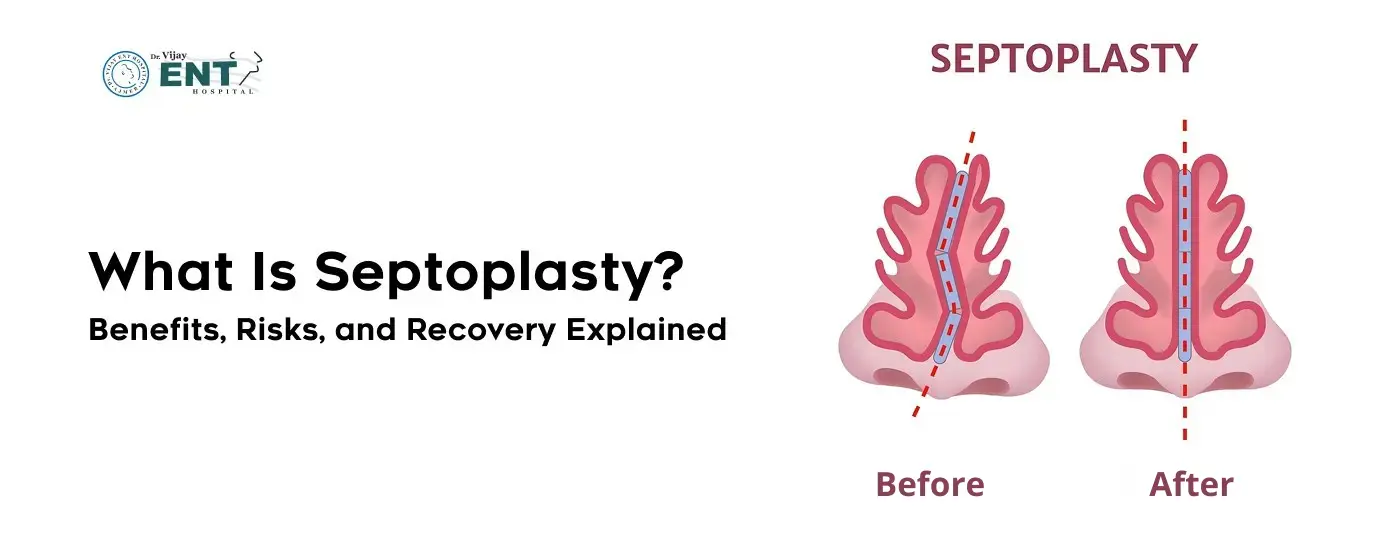
Septoplasty is a surgical procedure used to correct a deviated nasal septum, the wall of cartilage and bone that separates the two nostrils. When the septum is significantly crooked, it can block airflow and lead to breathing difficulty, nasal congestion, sinus discomfort, and frequent nosebleeds. This blog explains what septoplasty is, when it may be needed, how the procedure is performed, its risks, and what recovery typically involves.
Septoplasty refers to a surgery performed inside the nose to repair the deviated septum. The nasal septum is the wall made of cartilage and bone that separates the two nostrils. When it is significantly bent or off-centre, it is known as a deviated septum. This can reduce airflow through the nose and may cause breathing problems, nasal blockage, sinus infections, snoring, or frequent nosebleeds. Furthermore, your ENT surgeons can recommend a surgery for you in the following cases as well:
Septoplasty should always be performed by a qualified ENT surgeon after proper evaluation.
Preparing for septoplasty usually involves a medical evaluation and a few precautions before surgery. Your healthcare provider may give specific instructions depending on your condition and overall health. Here is how it happens:
Medical examination before surgery: Your healthcare provider will ask you about the medications or supplements that you take.
Restrict certain medications: Your ENT surgeon may restrict you from taking certain medicines that can increase the chances of excessive bleeding.
Take necessary precautions: Your ENT doctor can advise you on your food habits. Especially on the matters of what food and drinks you need to restrict before and after surgery.
During septoplasty, the first step is that you will be put under general anaesthesia. Another option is to provide local anaesthesia that only numbs your nose. After this, your surgeon will create an incision or a cut on one side of your nose and lift the thin membrane (mucosa) that covers and protects your septum. The surgeon then reshapes or repositions the bone and cartilage.
There are situations when ENT surgeons opt for turbinate reductions alongside septoplasty. Afterwards, they will reposition the mucosa over your septum. In some cases, soft splints or packing may be placed inside the nose. This material holds nasal tissue in place, prevents nosebleeds, and reduces the risk of scar tissue. In addition to this, your surgeon may sew tissue back together using dissolving stitches. After some time, they will disappear on their own.
Septoplasty is usually performed under local or general anaesthesia, so pain is not typically felt during the procedure. After surgery, mild to moderate discomfort, facial pressure, or nasal soreness may occur for a few days.
Septoplasty may help improve nasal function and overall comfort in people with a deviated septum. Potential benefits include:
Like any surgical procedure, septoplasty also has some possible risks and complications, although serious issues are uncommon. It involves:
After septoplasty surgery, you will be kept under observation, and proper medical guidance will be provided until you get back to your senses. After the procedure, you may be monitored for a short period before being discharged, depending on your condition and the type of anaesthesia used. Don’t forget that after the surgery, you may encounter:
If the symptoms are persistent, you can consult with your healthcare provider.
Most people recover from septoplasty within 1 to 2 weeks, although complete internal healing may take longer. The tissues inside the nose, including cartilage and bone, may continue healing for several months. You need to take care of yourself during the recovery time, and have proper guidance for:
Care for Your Nose: After the surgery, for almost two weeks, avoid blowing your nose. Sneeze with an open mouth and sleep on your back only.
Cleaning and Proper Dressing: You need to leave a gauze in your nose until the drainage stops, which usually takes two days. Your ENT doctor will guide you on how to do proper dressing and cleaning of your nose and rinse it with saline. If you develop crusting outside your nose, clear it with a cotton swab. Don’t stick the swab inside your nose; it may cause trouble.
Eating: Avoid eating spicy foods for a week or more, which can cause a runny nose. Eat normal home-cooked food and meals.
Activity and Rest: Rest is important during the first few days after surgery. Most people can return to their normal routine within about a week, while strenuous activities and exercise may need to be avoided for longer.
Septoplasty is a commonly performed procedure used to correct a deviated septum and improve nasal breathing. While the surgery is generally safe, understanding the procedure, possible risks, and recovery process can help patients make informed decisions. If symptoms such as nasal blockage, breathing difficulty, or recurrent sinus issues continue for a long time, these may be signs to see an ENT specialist for proper evaluation and treatment.

Dr. Vijay Gakhar is a renowned ENT specialist and expert Microtia surgeon in Rajasthan, India. Carrying the MBBS degree from the prestigious SMS Medical College, Jaipur, he holds specialisation with an MS in Otolaryngology ENT (Ear, Nose, and Throat) from Jawaharlal Nehru Medical College (JLN), Ajmer. Besides known for performing the best ear reconstruction surgeries, Dr. Gakhar grabs expertise in all other ENT services such as Septoplasty, Myringoplasty, Nasal Endoscopy, Commando Surgery, and FESS (Functional Endoscopic Sinus Surgery), for over 20 years.