58-59 Balaji Nagar, St Stephen Circle, Makarwali Road, Ajmer, Rajasthan 305004


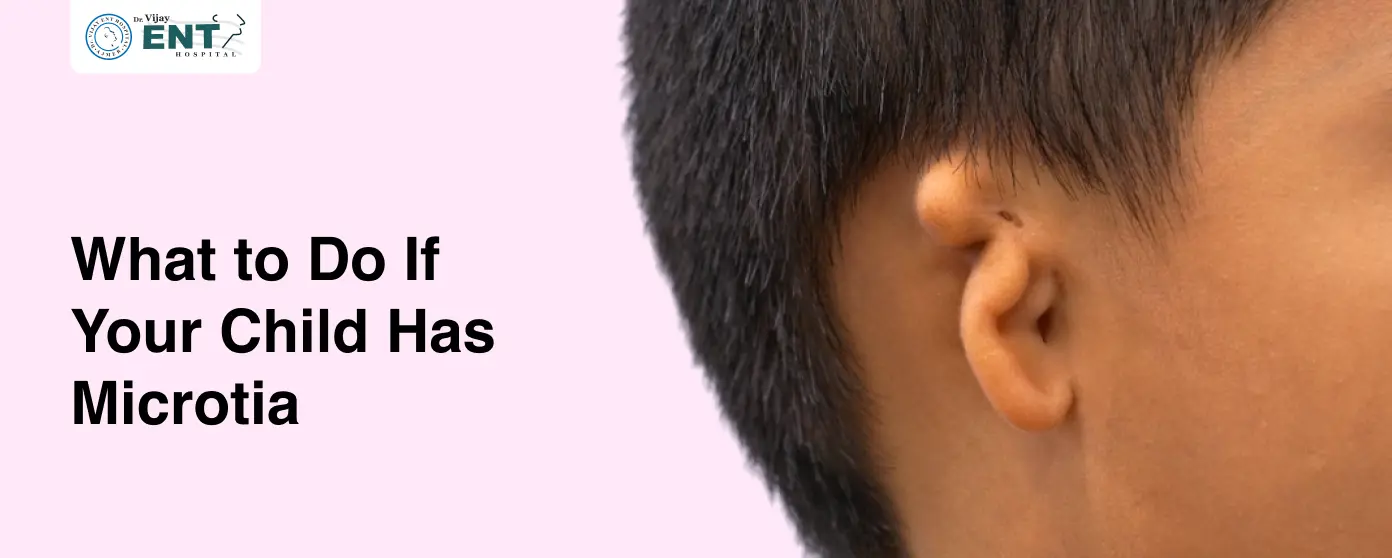
Why my child? What is this? How to deal with it? What should I do now? Will my child become deaf? What did I do wrong? All these questions are genuine if you are a parent and your child has microtia. It is a congenital birth defect disease where the outer part of the ear is underdeveloped or missing.
If your child is suffering from this disease, then you must read this comprehensive microtia parenting guide, providing all details regarding microtia. The details include why microtia in children happens. What steps should you take? And what are its treatments?
There are some microtia diagnosis steps to take for the safety of your child and for proper understanding of this disease:
Sometimes, microtia can occur with other birth defects. For a diagnostic test, reach out to a pediatrician and check for heart and kidney associated issues. Additionally, pediatric microtia care is very crucial, as through this you can examine your child’s ear, its size, shape, or whether its ear canal is open or blocked.
As a parent, you need to schedule a hearing test for your child to know if he/she is deaf or not. A test named Auditory Brainstem Response (ABR) measures how inner ear and brain pathways respond to sound. It can diagnose hearing loss of microtia in children; it is especially for young children and people unable to cooperate with hearing tests.
In children, both the urinary system and ear develop simultaneously, due to which the chances of kidney problems have increased. An ultrasound is recommended to identify any abnormalities in the kidney, that can cause a big problem in the future.
CT scan is crucial for microtia, as it showcase the images of hidden structures of inner and middle ear structures. This scan reveals if the ear canal is malformed, helping ENT doctors in surgeries.
ENT consultation for microtia is very crucial, as a specialist can guide you on surgeries, treatments, and precautions you need to take. Moreover, a doctor can also provide precise treatment based on the stage of microtia.
Generally, microtia is treated with surgeries, but sometimes it can be cured by other treatments like ear prosthetics and hearing aids. For more details read the treatments given below:
This is a surgical treatment of microtia. In this surgery, the doctor cuts cartilage from your own rib and places it under your ear skin to form the new ear framework.
In this surgery a plastic material is used to build a natural-looking outer ear. The material is synthetic, which is used in surgery. Later, the implant is placed under the skin by a surgical method.
This treatment is very common, as a custom-made silicone ear is used to replicate the natural look of the ear. This is generally a non-surgical treatment, focusing on the building of an artificial ear rather than making one from a patient’s rib.
It is a type of hearing device that uses bone conduction to bypass the inner and outer ear, delivering sound directly to the inner ear. It is made up of titanium and surgically placed in the bone behind the ear.
Microtia in children is a rare disease that requires immediate attention. Parents should focus on the child’s holistic care, including regular checkups. As a parent, you should openly discuss the disease with your child with positive language and supporting intention, helping the child with emotional strength. With the guidance of specialised ENT doctors like Dr Vijay Gakhar in Jaipur, you can successfully address microtia disease. From surgical procedure to normal treatment, he provides all treatments in their hospital.
