58-59 Balaji Nagar, St Stephen Circle, Makarwali Road, Ajmer, Rajasthan 305004


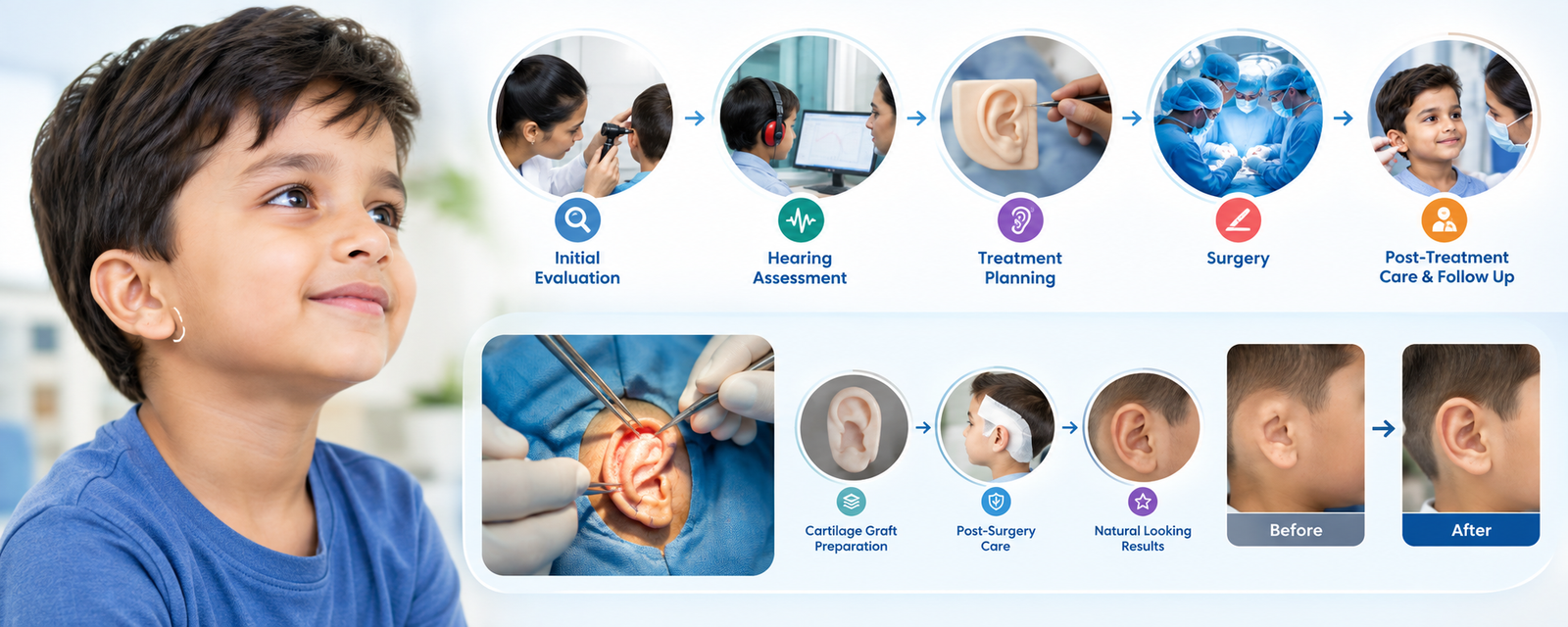
Pediatric Microtia is a congenital deformity characterized by the underdevelopment of the outer part of the ear. In microtia, the ear can be small, malformed or absent and the condition may be accompanied by a narrow or absent ear canal. This acquired defect that can lead to hearing loss in the children. The discovery by parents of this congenital deformity will raise many questions. Is the child’s hearing affected? Will the ear need to be rebuilt? What is the average age for surgery? What surgical interventions are available?
The treatment of pediatric microtia requires a careful balance between reconstructive surgery and hearing restoration. It is based on the child’s anatomy, hearing, age and overall health status. Timely consultation of microtia surgeon allows you to choose the right intervention and get proper treatment before its too late.
Microtia in a child is commonly called pediatric microtia. The condition is characterized by malformation and partial or complete absence of the outer ear in children. Microtia in its various forms is mainly linked to abnormalities in the outer ear or pinna, medically called the auricle. In most cases, microtia is commonly associated with varying levels of ear deformity, ranging from mild cases to total absence of the outer ear. This total absence of the outer ear is termed anotia.
The deformity occurs either on one or, rarely both sides of the head. Additionally, if the ear canal or any of the parts of the ear are malformed, it may result in hearing problems. It is important for parents of children with microtia to note that the deformity of the ear may not be an accurate indicator of hearing ability. As such, it is important to carry out a hearing test.
A child may require assessment by an ENT specialist and audiologist to investigate the development of the outer ear and evaluate hearing and check if the ear canal or middle-ear structures are involved. Depending on the condition, doctors may recommend:
The specific tests required will differ depending on the child’s condition, symptoms, and the type of microtia present.
Not every child diagnosed with microtia requires the same form of treatment. Some children may only require monitoring or intervention regarding their hearing, while others may need to undergo reconstructive surgery to repair the formation of their external ear.
The type of treatment required will depend on the severity of the condition, hearing capability, the age of the child and the type of reconstruction, if any, that is needed. This is why it is important that parents do not make their decision for surgery based on the appearance of their child’s ears.
Consulting with a specialist will allow parents to have a better understanding of the required intervention, if any, for their child. For more information on the initial steps regarding diagnosis, parents can refer to “What to Do If Your Child Has Microtia”.
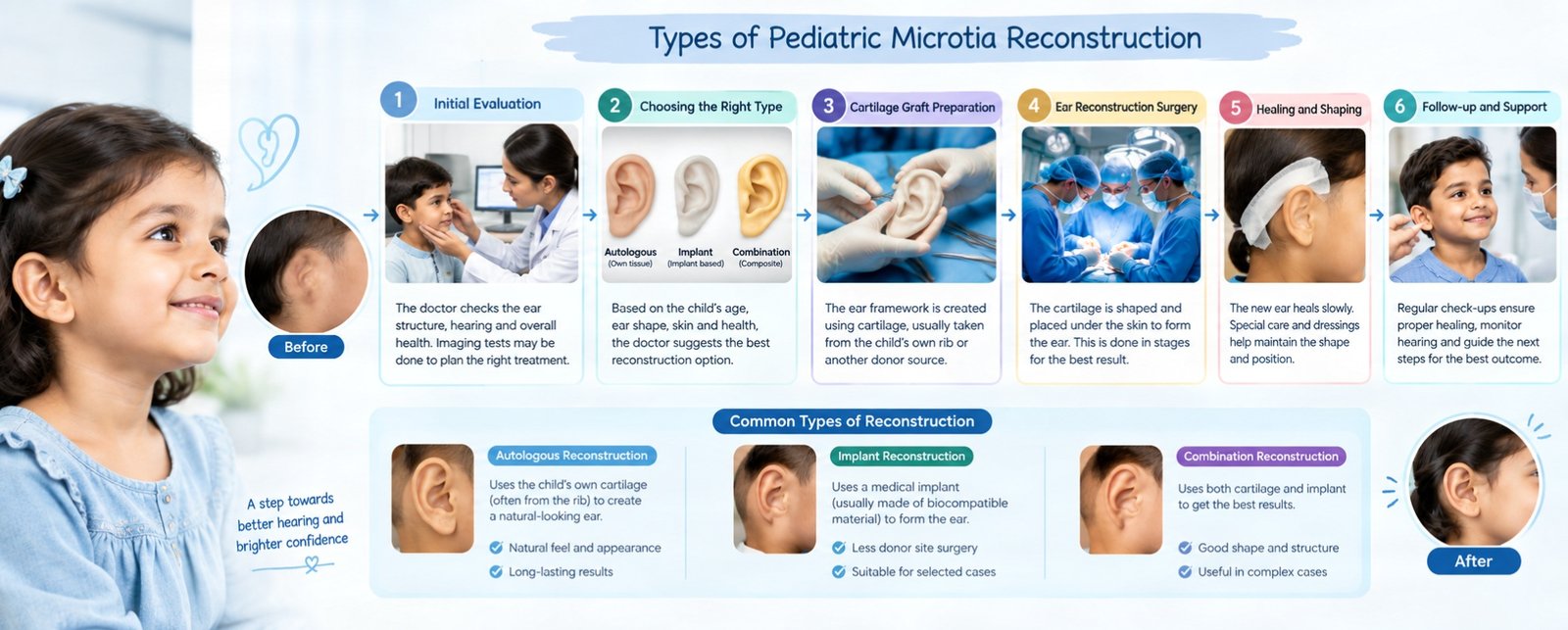
In this technique, the surgeon takes cartilage from the patient’s ribs and shapes it to the form of the ear. The reconstructed ear is placed under the skin at the site where the ear was located. This technique usually requires two surgeries and ample supply of cartilage from the ribs.
A framework made of porous polyethylene can sometimes be used for the reconstruction of the child’s ear. Unlike the previous method, this one does not require harvesting cartilage from the child’s ribs, and in some cases can be used at a younger age. However this method is not suitable for all patients.
An external prosthetic ear can also be used in some cases. However prostheses require special maintenance and are not always appropriate for the patient’s health conditions.
The method of ear reconstruction has to be chosen individually for each patient, and not based only on age or information found on the web.
One important detail for parents to understand is that reconstructing the external ear and correcting hearing loss are mostly not necessarily the same procedure. External ear reconstruction primarily deals with the shape and form of the ear. If a child has hearing loss due to an absent or underdeveloped ear canal, a separate procedure to treat the hearing loss would be required. Possible options for hearing loss can include hearing devices or, in certain situations, an operation to create a new ear canal.
The specific option would depend on the anatomy of the child’s ear and hearing tests. For more information on hearing, parents can also read the article “Does Microtia Surgery Improve Hearing?”.
Choosing a microtia surgeon for your child requires more than a general look at their ENT experience as a professional. Instead, it is better to ask specific questions to shortlist the best microtia surgeon –
A pediatric microtia surgeon should evaluate the child’s complete condition before recommending surgery. Dr. Vijay ENT Hospital in Jaipur provides pediatric ENT consultation and microtia treatment, including evaluation, hearing assessment and reconstructive treatment planning. The hospital’s microtia service page states that Dr. Vijay Gakhar has more than 20 years of experience and has performed 1,000+ microtia surgeries in Jaipur and Rajasthan.
The parents in search of pediatric microtia surgery in Jaipur may begin with a specialist’s consultation. At Dr. Vijay ENT hospital, the microtia treatment consists of evaluation, hearing assessment, pre-surgical and post-surgery procedures. Besides, the hospital offers a list of microtia treatments that include rib cartilage reconstruction, Medpor framework reconstruction, atresia repair, and other ear reconstruction surgeries.
The appropriate treatment for a child with microtia will be determined by an individual case. Parents can discuss during the consultation the possible treatment options for their child’s case and determine whether he or she may benefit from reconstructive surgery, hearing assistance, or regular monitoring.
Pediatric microtia refers to a congenital deformation of the outer ear in children. This congenital ailment may present itself in various forms like ranging from mild deformity to total absence of one or both ears.
In some cases, children may have regular hearing abilities while in others hearing problems may occur due to malformation of the ear canal or other middle or inner ear deformities. Hearing tests are indicated for all children with microtia.
As with any surgical procedure, microtia repair carries some risks. The extent of these risks varies with the technique used and the condition of the patient, and a specialist should discuss the potential benefits, limitations and risks of the proposed treatment option with the parents in each +individual +case before the surgery.
The optimal time for surgery depends on the reconstruction method and the child’s development. Reconstruction using the patient’s own cartilage from the ribs is usually performed between the ages of 6 and 10, but some procedures can be performed at an earlier age.
The number of surgeries needed will vary depending on the particular reconstructive method and the individual characteristics of the child’s body. The reconstruction of the ear using the patient’s rib cartilage usually involves a multi-stage surgical intervention whereas some methods using implants may be less resource-intensive.
Each pediatric microtia case is unique, and the optimal treatment approach should be determined on an individual basis. In some cases, children may require hearing tests and therapies, whereas some people may need ear reconstruction. The most important step in terms of deciding on the management strategy is evaluating the extent of ear malformation, as well as the child’s hearing ability. After these parameters are determined, the surgeon and the parents can decide what interventions are needed and when it is possible to undertake them. If you are considering microtia treatment for children, microtia surgery for children or consultation with a pediatric microtia surgeon, an individual examination is the best way to understand the available options.

Dr. Vijay Gakhar is a renowned ENT specialist and expert Microtia surgeon in Rajasthan, India. Carrying the MBBS degree from the prestigious SMS Medical College, Jaipur, he holds specialisation with an MS in Otolaryngology ENT (Ear, Nose, and Throat) from Jawaharlal Nehru Medical College (JLN), Ajmer. Besides known for performing the best ear reconstruction surgeries, Dr. Gakhar grabs expertise in all other ENT services such as Septoplasty, Myringoplasty, Nasal Endoscopy, Commando Surgery, and FESS (Functional Endoscopic Sinus Surgery), for over 20 years.