58-59 Balaji Nagar, St Stephen Circle, Makarwali Road, Ajmer, Rajasthan 305004


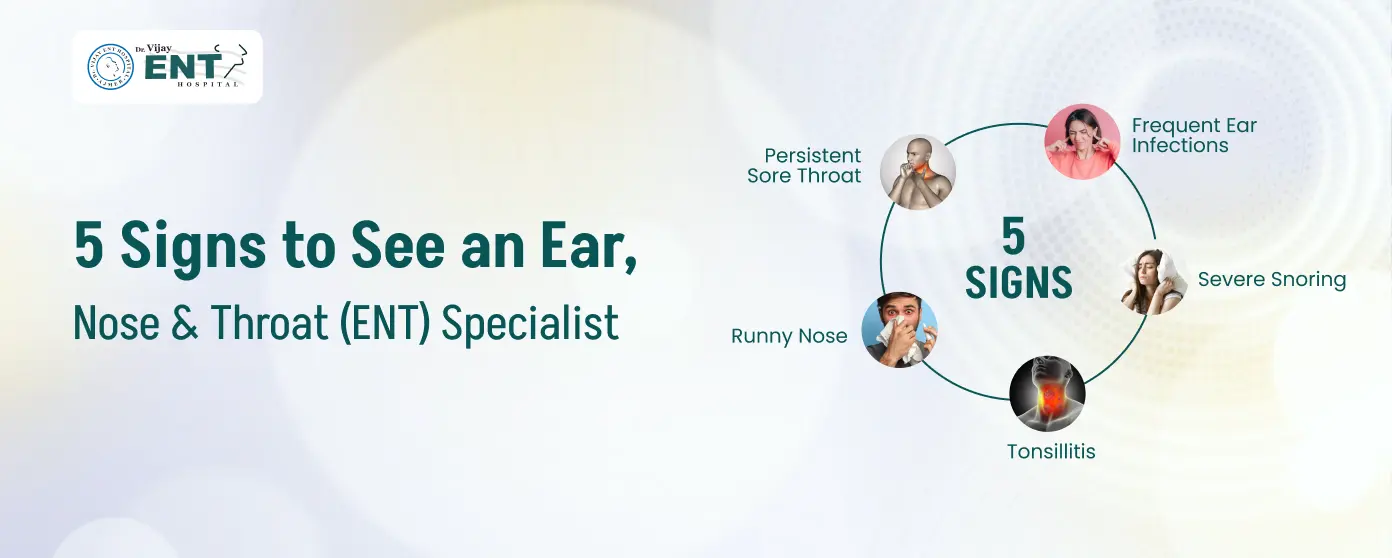
A sore throat that won’t go away. An ear infection that keeps coming back. Snoring so loud it disrupts your sleep. These aren’t just minor inconveniences; they could be early warning signs of a serious ENT condition. Knowing when to act can make all the difference.
Ear, nose, and throat (ENT) issues are among the most common health concerns, yet many people delay consulting a specialist until the condition worsens. Knowing when to visit an ENT specialist can help prevent complications and ensure timely treatment.
In this blog, we’ll explore the most common signs that indicate it’s time to consult an ENT doctor. Understanding these ENT symptoms early can help you decide when to see an ENT specialist.
An ENT specialist or otolaryngologist is an ear, nose, and throat doctor who treats the most sensitive parts of the human body and treats both cancerous and non-cancerous tumours. They are also known as healthcare providers with a certified medical degree and practical experience. Dr Vijay Gakhar is a highly experienced ENT specialist with clinics in Jaipur and Ajmer, offering comprehensive diagnosis and treatment for a wide range of ENT conditions. He is also associated with Vijay ENT Hospital, which provides specialised care for ENT diseases. An ENT specialist is the right doctor to consult when you experience persistent ear, nose, or throat symptoms that do not improve with basic treatment.
The ENT specialists treat conditions affecting your ear, nose, and throat. These conditions can range from mild flu symptoms to severe conditions such as throat cancer. Just because an ear, nose, and throat doctor diagnoses such a wide range of conditions and diseases, they are well-trained to perform surgical and non-surgical treatments. From minor infections to chronic conditions, ENT specialists are trained to handle a wide spectrum of ear, nose, and throat problems effectively.
When to see an ear, nose, and throat doctor? Several signs indicate the need to see an ENT specialist, or your primary care physician may recommend it. Here are the 5 most common signals that indicate when you need to visit them.
If your sore throat lasts longer than a week or keeps returning frequently, it may indicate an underlying condition that needs medical evaluation.
Sore throat, or Pharyngitis, refers to a scratchy or burning sensation in the back of the throat. Patients often have difficulty swallowing food or speaking. The primary cause behind a sore throat is a viral infection, such as the common cold. It takes three days to a minimum of ten days to cure this problem completely. Several symptoms are the main drivers behind this condition, such as:
If your sore throat lasts longer than 7–10 days, keeps coming back frequently, or is accompanied by high fever, difficulty swallowing, or voice changes, you should consult an ENT specialist.
In such scenarios, it’s advisable to visit a trusted healthcare provider who can identify the cause and provide prompt medical attention.
Ear infections, also known as otitis media, usually occur in children between 6 months and 2 years. They’re common until age 8. This virus or bacteria infects the space behind the child’s eardrum, causing ear pain and making your child feel fussy or irritated. Generally, ear infections resolve on their own, but in some cases, such as surgical procedures like tympanoplasty, they require medical attention or guidance from an ear, nose, and throat doctor. Here is the list of some common symptoms that indicate ear infections at the right time:
If ear infections occur repeatedly, cause severe pain, lead to hearing issues, or include discharge from the ear, it is important to seek medical attention from an ENT specialist.
In most cases, ear infections go away on their own, but you cannot ignore persistent symptoms, which may impact the child’s daily routine. Treatment depends on the cause and may include medications, lifestyle changes, or further evaluation if symptoms persist.
Runny nose, or rhinorrhea, is the most common symptom that requires guidance from an ear, nose, and throat doctor for treatment. The common reason behind its occurrence is the allergies and viral infections a patient has due to low immunity. There are certain methods that your ENT doctor may suggest for treating this condition. Some of the familiar symptoms of this condition are:
If your runny nose persists for more than 10 days, keeps recurring, or is associated with facial pain, headaches, or breathing difficulty, you should visit an ENT specialist.
Treatment depends on the underlying cause and may include medications, allergy management, or further evaluation for chronic or structural issues. It is advised in cases of structural problems such as nasal polyps, deviated septum, or enlarged adenoids. Moreover, patients can try home remedies to cure a runny nose, such as taking adequate rest, drinking plenty of fluids, using a saline nasal spray, or inhaling steam.
Snoring is often considered normal, but severe or chronic snoring may be linked to conditions like obstructive sleep apnea, which can affect overall health if left untreated. Moreover, it takes a toll on patients’ sleep cycle. In simple terms, it refers to the unusual habit of producing rattling, grumbling, or snorting sounds some people make during their sleep. The main reason behind its occurrence is obstruction in the airways. To detect snoring, have a look at its symptoms:
If snoring is loud, frequent, or accompanied by breathing pauses during sleep, daytime fatigue, or poor sleep quality, it may indicate sleep apnea and requires evaluation by an ENT specialist.
This habit is most common in men, but excessive or persistent snoring is an acute condition that often requires surgical treatment. Your ENT specialist may advise you to undergo surgeries like septoplasty, ablation therapy, or laser-assisted uvulopalatoplasty.
Tonsillitis is a prevalent condition that occurs when your tonsils are affected. Sore throat, fever, and swollen lymph nodes are the persistent symptoms of this disease. Its treatment usually depends on whether the infection is viral or bacterial. The recovery time is around a week. Moreover, there are additional symptoms that cause tonsillitis:
If tonsillitis occurs frequently, causes severe throat pain, high fever, difficulty swallowing, or does not improve within a week, it is advisable to consult an ENT specialist.
This problem is likely to happen between the ages of 5 and 15. Apart from this, construction workers are at a higher risk of encountering germs frequently. The ENT surgeons believe it can be cured effectively with the help of antibiotics and prescribed medicines. Surgeries are required only at the acute stages of the disease.
An ENT specialist diagnoses ear, nose, and throat diseases. Additionally, they also treat and advise a wide range of other conditions affecting your head and neck region. Here is the complete list of the diagnoses that ENT doctors treat:
You should consult an ENT specialist without delay if you experience:
Early diagnosis can prevent complications and ensure faster recovery.
ENT conditions are more common than most people realise, and delaying treatment can turn a manageable problem into a serious one. Whether it’s a persistent sore throat, recurring ear infections, or chronic snoring, your symptoms deserve professional attention.
If you are experiencing any of the symptoms mentioned above, it’s important not to ignore them. Early consultation can help prevent complications and ensure effective treatment.
Dr Vijay Gakhar, an experienced ENT specialist in Jaipur and Ajmer, provides expert care for a wide range of ENT conditions. Book your consultation today and take the first step toward better health.

Dr. Vijay Gakhar is a renowned ENT specialist and expert Microtia surgeon in Rajasthan, India. Carrying the MBBS degree from the prestigious SMS Medical College, Jaipur, he holds specialisation with an MS in Otolaryngology ENT (Ear, Nose, and Throat) from Jawaharlal Nehru Medical College (JLN), Ajmer. Besides known for performing the best ear reconstruction surgeries, Dr. Gakhar grabs expertise in all other ENT services such as Septoplasty, Myringoplasty, Nasal Endoscopy, Commando Surgery, and FESS (Functional Endoscopic Sinus Surgery), for over 20 years.