58-59 Balaji Nagar, St Stephen Circle, Makarwali Road, Ajmer, Rajasthan 305004

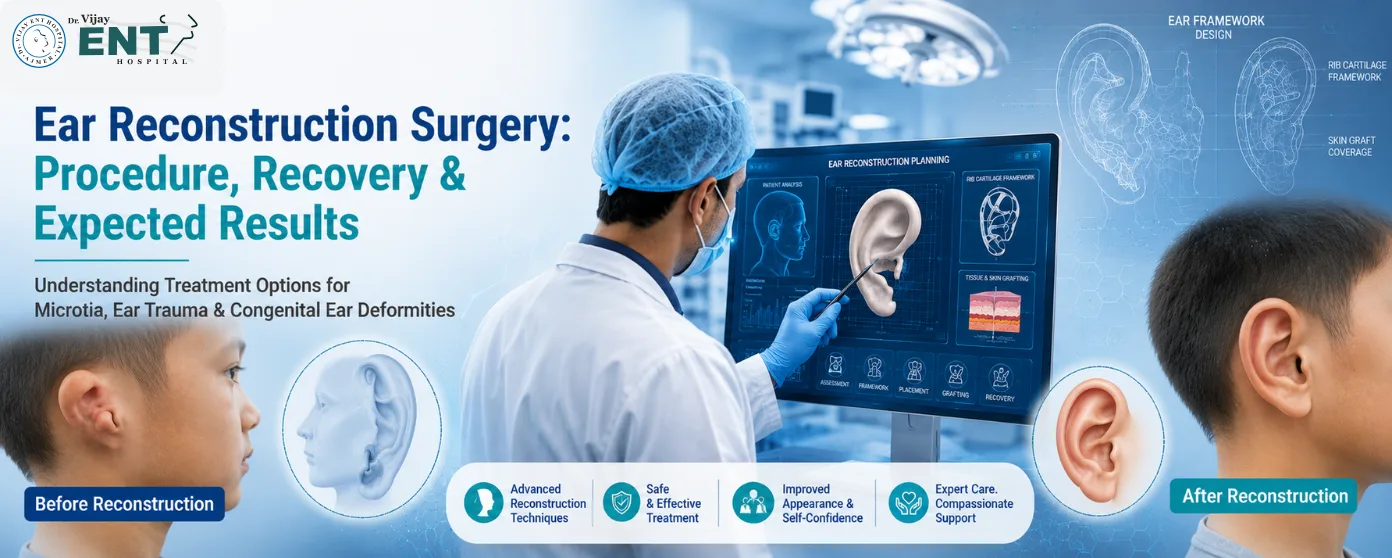
Ear reconstruction surgery is a surgical technique to restore the form, shape, and function of the outer ear affected by injury, trauma (such as burn), and congenital conditions like microtia. In this surgery, the external part of the ear, called the pinna or auricle, is repaired.
Ear reconstruction surgery may involve techniques such as autologous rib cartilage reconstruction, Medpor (porous polyethene) reconstruction, and other specialised microtia repair procedures. The most suitable technique depends on the patient’s age, ear condition, and treatment goals. Conditions that require this surgery often arise during fetal development, and in children who have it congenitally. In children with congenital ear conditions such as microtia, the timing of surgery depends on the reconstruction technique. Rib cartilage reconstruction is often performed between 8 and 10 years of age when sufficient cartilage is available, while some implant-based techniques may be performed earlier in selected cases. Ear reconstruction is one of the most common treatment approaches for patients with microtia. If you would like to understand the available treatment options in detail, read our guide on how microtia is treated.
When a patient undergoes this surgery, he/she needs to understand various things like ear reconstruction surgery procedures, recovery and aftercare, and what really happens during the surgical part. In this blog, you will get to know all of these.
Ear reconstructive surgery is mainly required for:
This surgery is necessary for children who are affected by congenital ear problems, such as microtia (a condition in which the outer ear is underdeveloped) and other congenital ear deformities that affect the shape or structure of the ear. Understanding the underlying condition is important before planning surgery. Learn more about the causes, symptoms, and treatment of microtia to understand how the condition affects ear development.
Traumatic injuries like burns, animal bites, accidents, and sports injuries may damage the outer part of the ear or may cause partial or total loss of the ear. In this situation, surgical ear reconstruction is required.
Some patients have undergone surgery to remove cancerous skin (such as melanoma or basal cell carcinoma) from the ear, which may result in the need for tissue reconstruction to restore the original appearance and fill in defects.
Ear reconstruction surgery primarily focuses on restoring the appearance and structure of the outer ear. In children with microtia, hearing loss may also be present due to abnormalities of the ear canal or middle ear structures. In such cases, hearing improvement often requires separate evaluation and treatment, such as hearing devices or additional procedures. An ENT specialist can determine whether hearing restoration treatment is needed alongside ear reconstruction. If hearing loss is a concern, read our detailed article on does microtia surgery improves hearing to understand what improvements may be possible after treatment.
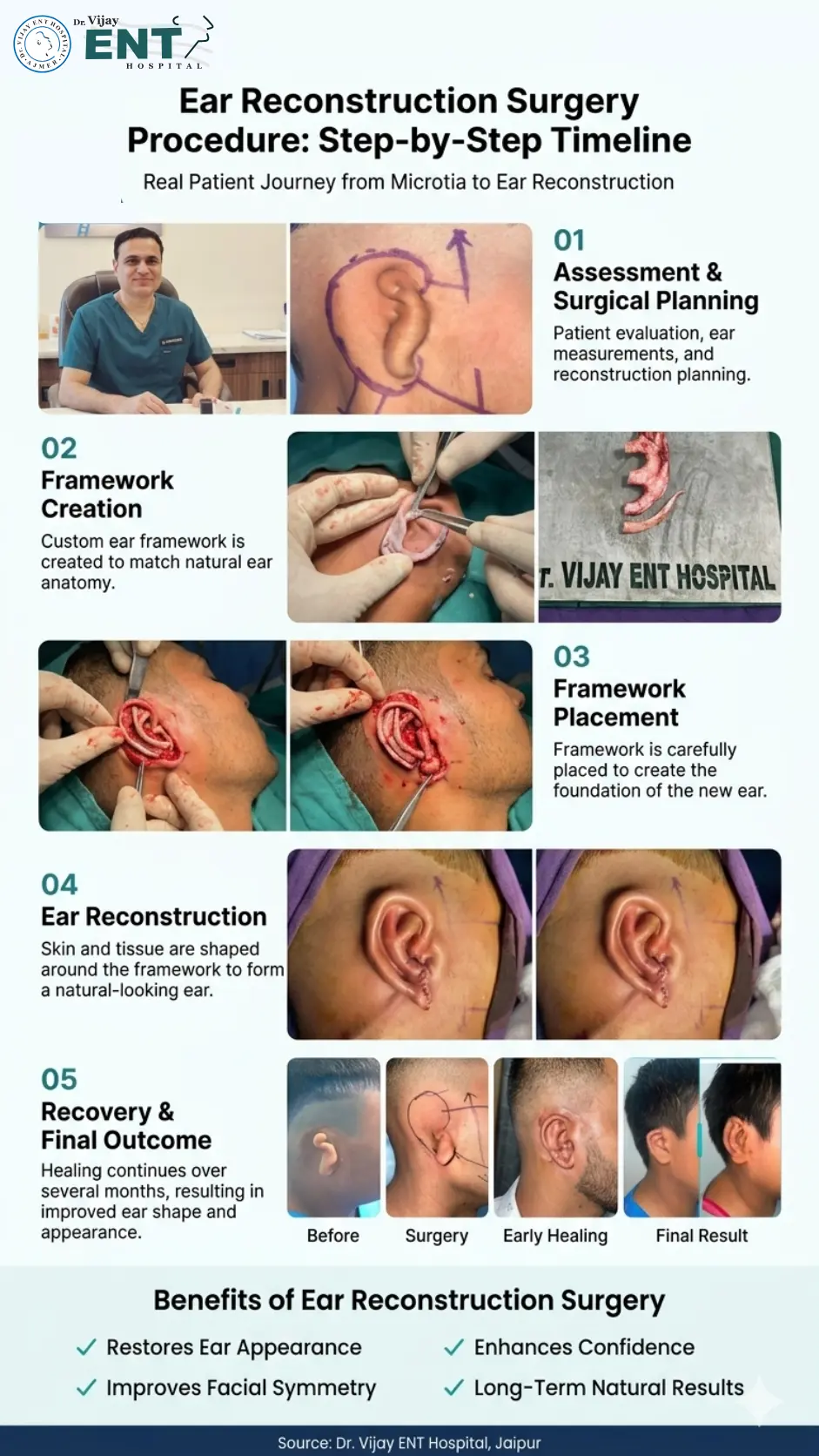
There are several approaches to ear reconstruction surgeries. Let’s understand the common procedure steps briefly:
Just right before the surgery begins, your healthcare provider will clean the affected ear part efficiently, ensuring the surgical part is properly sterilised. Then, surgeons give anaesthesia to the patient, so you or your child feels no pain during the surgery.
The surgeon creates a new ear structure by selecting the appropriate method depending on the severity of the condition.
After preparing the ear structure, the surgeon makes a small incision behind the ear or in the area where the implant will be placed. Then, the carved cartilage or implant is carefully inserted into the cut.
After the framework is placed, additional tissue or skin grafts may be used to improve the contour, coverage, and natural appearance of the reconstructed ear. Skin grafts are commonly taken from areas such as the scalp or groin, depending on the surgical technique used.
Since the surgical wound is still fresh, it takes time to heal. Therefore, to speed up healing, some small, soft tubes (surgical drains) may be placed temporarily under the skin to drain excess fluid or blood. And also, the surgical part is covered with bandages to keep it safe from any damage.
Ear reconstruction surgery offers both cosmetic and psychological benefits. Depending on the condition being treated, patients may experience:
The overall outcome depends on the severity of the condition, the surgical technique used, and proper post-operative care.
Proper recovery and post-operative care are essential for achieving the best possible surgical outcome. Following your surgeon’s instructions carefully can help reduce complications and support faster healing.
The overall recovery depends on your surgery type (such as microtia operation procedure or autologous ear reconstruction). In some conditions, you will be released on the same day from the hospital, while others require a hospital stay for better treatment.
Recovery: Initial healing typically occurs within a few weeks, while swelling gradually improves over the following months. Final results and complete tissue maturation may take several months, depending on the reconstruction technique used.
Like any surgical procedure, ear reconstruction surgery carries certain risks. Although complications are uncommon when performed by experienced specialists, patients should be aware of potential issues such as:
Following the surgeon’s post-operative instructions carefully can help minimise these risks.
Ear reconstruction surgery can restore the appearance of the outer ear and significantly improve confidence and quality of life for children and adults affected by congenital ear deformities, trauma, or cancer-related defects. Because every patient’s condition is unique, a thorough evaluation by an experienced ENT and ear reconstruction specialist is essential to determine the most suitable treatment approach and expected outcomes.
If you are considering ear reconstruction surgery for yourself or your child, consulting a specialist early can help you understand the available options and achieve the best possible results.
Most procedures take several hours, depending on the complexity of the reconstruction.
Patients are under anaesthesia during surgery. Some discomfort during recovery is normal and can usually be managed with prescribed medications.
Yes. Ear reconstruction can be performed in both children and adults, depending on the condition being treated.
Some scarring is expected, but surgeons typically place incisions strategically to minimise visible scars.
Yes. Ear reconstruction is one of the primary treatment options for children and adults with microtia. Depending on the severity of the condition, surgeons may use rib cartilage reconstruction, Medpor implants, or other specialised techniques to create a natural-looking outer ear.
Yes. Ear reconstruction is one of the primary treatment options for microtia. Depending on the severity of the condition, different reconstruction techniques may be recommended. You can learn more about microtia surgery and the treatment process.

Dr. Vijay Gakhar is a renowned ENT specialist and expert Microtia surgeon in Rajasthan, India. Carrying the MBBS degree from the prestigious SMS Medical College, Jaipur, he holds specialisation with an MS in Otolaryngology ENT (Ear, Nose, and Throat) from Jawaharlal Nehru Medical College (JLN), Ajmer. Besides known for performing the best ear reconstruction surgeries, Dr. Gakhar grabs expertise in all other ENT services such as Septoplasty, Myringoplasty, Nasal Endoscopy, Commando Surgery, and FESS (Functional Endoscopic Sinus Surgery), for over 20 years.