58-59 Balaji Nagar, St Stephen Circle, Makarwali Road, Ajmer, Rajasthan 305004


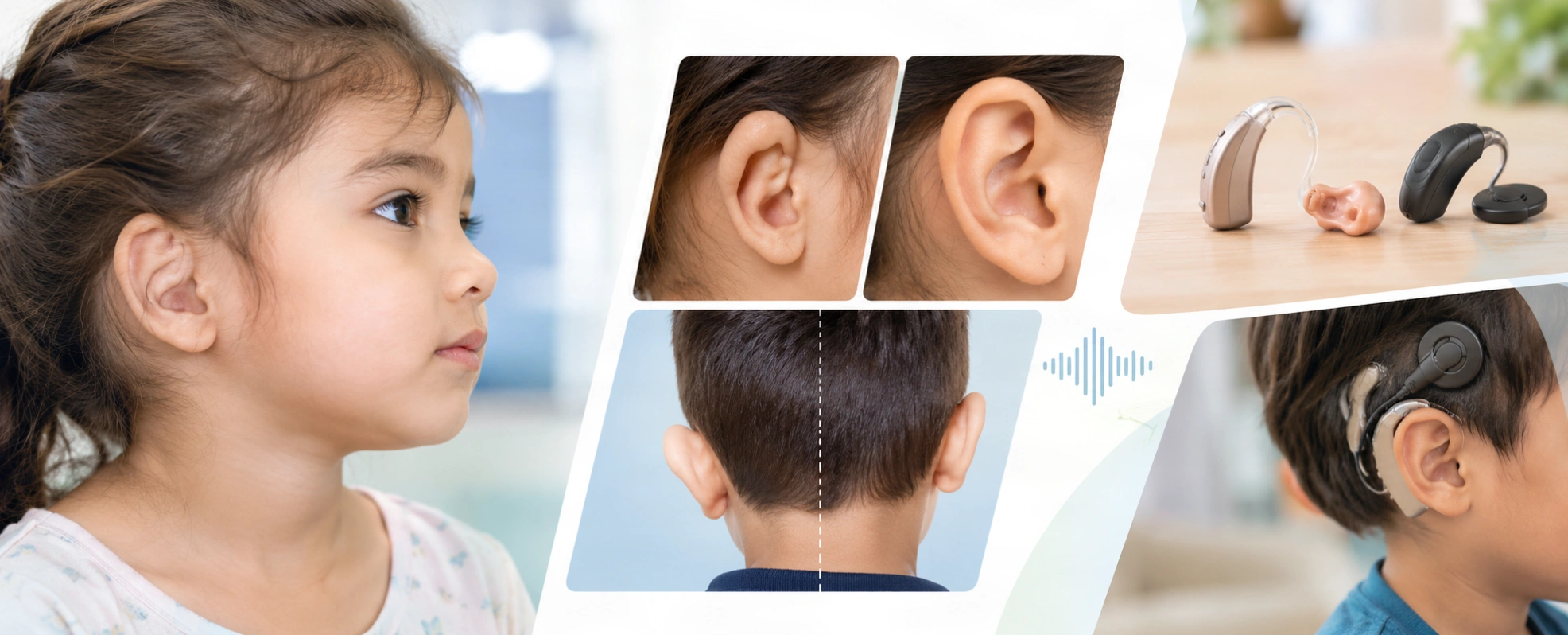
Microtia and ear asymmetry are situations concerning the size, shape, or role of the outside ears. They may be gift from delivery or, in a few cases, broaden due to harm or different scientific situations. Although they will appearance similar, microtia is a selected congenital ear condition, whilst ear asymmetry is a broader time period describing variations among the two ears.
Microtia is a congenital condition, where the outer part of the ear is missing. The word microtia originates from the Latin words ‘micro’ means small, and ‘otia’ means ear. Generally, it occurs when the outer part of the ear is not fully developed during the first trimester of pregnancy. Later, it becomes a problem in which a person not only faces problems with hearing but also seems weird in public.
Microtia usually affects individuals in stages; from an initial normal stage, a person will hear normally like others, but the last stage causes hearing loss (Complete absence of the outer ear), which is called Anotia.
Though the exact cause of Microtia is still unknown, it occurs during the first trimester of pregnancy. Scientists have found some factors that can be considered as causes, like genetic changes, alcohol during pregnancy, maternal health during pregnancy, or a diet low in folic acid.
Microtia has many appearances according to its grades, but usually the initial grade looks normal. Below are some symptoms and signs through which you can ensure Microtia.
Microtia doesn’t always need treatment, but if a child is facing problems in hearing, then it may create hurdles in a child’s personal development and needs treatment. Doctors can effectively treat the outer part of the ear with microtia surgery.
However, the absence of the ear canal is a big deal and can cause various problems like hearing loss, language development, learning difficulties in school, and others. Some common treatments for microtia are:
Note: A surgeon advise reconstruction surgery between the ages of 6 to 9.
Pediatric Microtia: Treatment and Surgery for Children
Medpor Microtia Surgery: A Guide to Medpor Ear Reconstruction
Anotia Treatment and Ear Reconstruction: Complete Guide to Missing Ear Surgery
Ear Deformity: Causes, Precautions and Treatment Options
Congenital Ear Deformity and Microtia: A Complete Guide for Parents
Rib Cartilage Ear Reconstruction: Procedure, Recovery & Results
Ear asymmetry basically difference in the size, shape and position of both ear that can affect your facial balance. It might be due to natural genetic or the cartilage is not properly developed. Also, some people suffered during any trauma or injury.
Asymmetrical hearing loss can be confirmed by an audiologist at Dr. Vijay ENT Hospital. After conducting a comprehensive hearing test, the results will be plotted on an audiogram, which is a graph that visually represents your hearing loss. Asymmetrical hearing loss can also lead to feelings of imbalance. Since the inner ear plays a role in maintaining balance, uneven hearing can cause dizziness or a sense of unsteadiness.
There are two lines on an audiogram, one representing each ear. In most cases of hearing loss, the lines more or less overlap. But with asymmetrical hearing loss, one line differs from the other at least 10 decibels across three or more frequencies. This is a sure sign you have asymmetrical hearing loss.
There are many possible causes of asymmetrical hearing loss, including:
If you have temporary asymmetrical hearing loss, it means there’s an underlying cause that can be identified and addressed. For example, antibiotics can clear up an infection while a professional at Vijay ENT Hospital can remove impacted earwax.
If you have permanent asymmetrical hearing loss, it means you’ll need to be treated with hearing aids or cochlear implants, which are medical devices that can compensate for any damage to the auditory system. There are some personal sound amplification products, hearing aids & systems and implantable devices are available in the market. Determining the right device for you starts with a hearing test. Once your type and degree of hearing loss has been confirmed, you and your audiologist can work together to figure out the best treatment plan. For more information or to schedule an appointment with a hearing expert, contact Dr. Vijay ENT Hospital today.
Choosing a surgeon for microtia surgery and Ear asymmetry is a crucial task, as it can influence safety, recovery, and overall results of the reconstruction. With precise guidance and support of the surgeon, patients can recover faster from the microtia. From the above-written guidelines and information, one thing is pretty clear: that social media likes and followers don’t define the capabilities of doctors.
If your child or anyone you know is suffering from microtia, you must contact an experienced and the best microtia surgeon, like Dr Vijay Gakhar. His team at Vijay ENT hospital specialises in curing ear, nose, and throat diseases.
Normal ear asymmetry is a slight difference in the size, shape, or protrusion of the ears. All parts of the ears are present. Microtia is a congenital deformity that involves the complete or partial absence of the outer ear with a closed or absent ear canal.
It is normal to have minor irregularities in the shape or size of your ears because our faces are naturally asymmetrical. However, if you have unevenness of the entire outer ear and it seems to be absent some characteristic features of the ear, specifically the folds, or the canal is not visible, this may be a sign of microtia, a congenital deformity.
Microtia and uneven ears are most commonly formed during the first trimester of pregnancy when an embryo is developing its outer ear. The reason for this developmental defect is unknown; however, it may be secondary to decreased blood supply to the fetus or a syndrome or genetic abnormality.
Microtia is most commonly sporadic (no family history) occurring in about 90-95% of cases. About 5-10% of cases may be familial or may be associated with other abnormalities as seen in treacher Collins or goldenhar syndrome.
Microtia can be associated with absence of the ear canal on the affected side (aural atresia) resulting in hearing loss on the affected side only. Since the inner ear and auditory nerve are normal, hearing can often be restored with a bone anchored hearing aid.
If the child has normal hearing in the other ear and is otherwise developing normally, speech and language should not be delayed. However, it is important to have a hearing evaluation by an audiologist done in the first year of life to make sure that there is no hearing loss that could affect speech and language development.
Mild to moderate deformities of the ears can be corrected with ear molding in the first few weeks of life or with otoplasty (surgery to reshape the ears) at age five or older. More severe cases of microtia may require surgery to reconstruct the framework of the ear using rib cartilage and is typically done between ages six and ten, once the child has developed enough cartilage to use for the reconstruction.
There are two primary types of surgery used to reconstruct a malformed or absent ear in cases of microtia. The first is Rib Cartilage Grafting, which use the patient’s own cartilage to rebuild the framework of the ear. The second type is MEDPOR/OMNIPOR Reconstruction which uses a biocompatible porous polyethylene material to recreate the framework of the ear.
Medical Disclaimer: The information in this blog is provided for general informational and educational purposes only. Each individual case is different; and the treatment options may depend on many variables: microtia severity, your child’s hearing capacity, age, and overall health. Please consult an ENT specialist or audiologist who will be able to provide a proper diagnosis and discuss treatment options. Do not delay the medical consultation because of this article.

Dr. Vijay Gakhar is a renowned ENT specialist and expert Microtia surgeon in Rajasthan, India. Carrying the MBBS degree from the prestigious SMS Medical College, Jaipur, he holds specialisation with an MS in Otolaryngology ENT (Ear, Nose, and Throat) from Jawaharlal Nehru Medical College (JLN), Ajmer. Besides known for performing the best ear reconstruction surgeries, Dr. Gakhar grabs expertise in all other ENT services such as Septoplasty, Myringoplasty, Nasal Endoscopy, Commando Surgery, and FESS (Functional Endoscopic Sinus Surgery), for over 20 years.