58-59 Balaji Nagar, St Stephen Circle, Makarwali Road, Ajmer, Rajasthan 305004

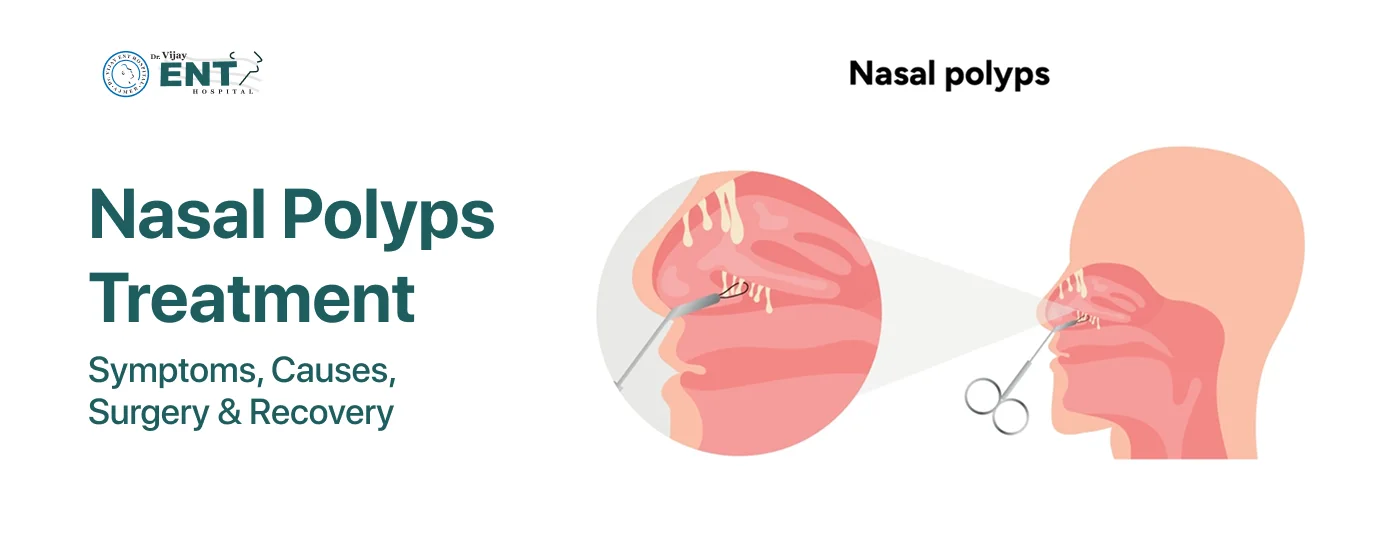
Nasal polyps are soft, painless, and teardrop-shaped structures developed on the lining of the nasal passages or sinuses. These growths (nasal polyps) are non-cancerous and harmless, and mostly happen in individuals with asthma, allergies, repeated infections, or nasal inflammation.
To understand this condition deeply, read this blog till the end, which involves nasal polyps treatment, causes, symptoms, and recovery processes.
Nasal polyps are soft, painless growths that form on the lining of the nasal passages or sinuses due to long-term inflammation. These are painless or benign growths in the nasal passages that usually appear on both sides of the nose.
Polyps are soft, fleshy, or yellow in appearance and can grow large enough to block the nose or cause sinus issues. Over time, these growths may enlarge and block the nasal passages, making breathing difficult.
Nasal polyps are more commonly seen in adults between 30 and 50 years of age, especially in men. Particularly, the risk increases after this age, resulting in chronic sinus infections, obstructive sleep apnea, or even altering the facial structure.
Nasal polyps are often caused by:
Chronic Inflammation: Long-term irritation or inflammation of the sinuses that often lasts for 2 months or more.
Allergic Rhinitis: Persistent allergies such as allergic rhinitis, sneezing, nasal congestion, or seasonal allergies may irritate the nasal lining and increase the risk of nasal polyps.
Asthma: Individuals with asthma, especially chronic asthma, are more susceptible to the formation of nasal polyps.
Aspirin Sensitivity: People who are sensitive to aspirin or NSAIDs (Nonsteroidal Anti-Inflammatory Drugs) have a higher chance of developing nasal polyps.
If nasal polyps are smaller in the nose, they may not cause symptoms, but if they get bigger, you may see these symptoms:
In some cases, a deviated nasal septum may also contribute to long-term nasal blockage.
Nasal polyps are diagnosed by expert ENT surgeons through the following specialised methods or procedures. But in the initial appointment phase, your healthcare provider may ask some questions or perform some basic steps:
To analyse more about polyps, they may also use these methods:
Nasal polyps treatments are based completely on the severity of the condition. Both medications and surgery are the best approaches, depending on the severity.
Medications are usually the first line of treatment and help reduce inflammation, shrink nasal polyps, and improve breathing symptoms.
Sometimes, antibiotics are also given if you have an infection.
Surgical treatments are only used if medications won’t work, or polyps are larger. These are the procedures your healthcare provider may perform:
In this surgical process, a surgeon uses a thin endoscope with small medical instruments to remove polyps, infected tissues, clear out sinuses, and other things that become a hindrance to the nasal passage. FESS is considered one of the most effective and minimally invasive procedures for chronic nasal polyps and sinus blockage. Learn more about Functional Endoscopic Sinus Surgery (FESS) and how it helps treat chronic sinus blockage and nasal polyps.
A small inflatable balloon is inserted through your nostril and into your sinus cavity. Surgeons inflate the balloon to extend or unblock the nasal passages.
If polyps are easily accessible, then polypectomy is used. Surgeons use a small instrument (suction device – microdebrider) to remove nasal polyps from your nose.
After having surgery, Most patients experience improved breathing and relief from nasal blockage after treatment, and they get relief by breathing freely without obstruction in their nose. Recovery from nasal polyps surgery takes time and proper care, and for this, you must follow the following instructions or steps:
Take the prescribed medication by an expert doctor to reduce swelling, inflammation, and pain. However, maintaining hygiene is your task, performing saline rinses 2-3 times daily to remove blood, crusts, and debris.
Other medications, such as steroid nasal sprays or drops, are used to reduce inflammation.
A doctor visit is necessary before or after nasal polyps treatment. Proper care ensures better recovery and significantly reduces the risk of recurrence or regrowth of the polyps. Persistent nasal blockage and recurring sinus infections are important signs that should not be ignored.
These are the symptoms that may indicate the need for nasal polyps treatment:
If you have already undergone the surgical procedure, follow-up visits to the doctor are crucial. However, if you face the following symptoms after surgery, then you must consult a doctor:
Yes, nasal polyps can recur, especially in people with chronic allergies, asthma, or sinus inflammation. Regular follow-ups with an ENT specialist, saline rinses, and prescribed nasal sprays help reduce the risk of recurrence.
Nasal polyps can significantly affect breathing, sleep, and overall quality of life if left untreated. Early diagnosis and proper treatment help prevent complications and improve long-term nasal health. If you experience persistent nasal blockage, loss of smell, or recurring sinus infections, consult an experienced ENT specialist for an accurate diagnosis and personalised treatment.
Small nasal polyps may improve with medications like steroid nasal sprays, but larger polyps may require surgery.
Nasal polyps are usually non-cancerous, but untreated polyps can cause breathing problems and recurrent infections.
Most nasal polyp surgeries are minimally invasive and performed under anaesthesia, causing minimal discomfort.
Initial recovery usually takes 1–2 weeks, while complete healing may take several weeks.
Yes, recurrence is possible, especially in patients with allergies or chronic sinus inflammation.

Dr. Vijay Gakhar is a renowned ENT specialist and expert Microtia surgeon in Rajasthan, India. Carrying the MBBS degree from the prestigious SMS Medical College, Jaipur, he holds specialisation with an MS in Otolaryngology ENT (Ear, Nose, and Throat) from Jawaharlal Nehru Medical College (JLN), Ajmer. Besides known for performing the best ear reconstruction surgeries, Dr. Gakhar grabs expertise in all other ENT services such as Septoplasty, Myringoplasty, Nasal Endoscopy, Commando Surgery, and FESS (Functional Endoscopic Sinus Surgery), for over 20 years.